Abstract
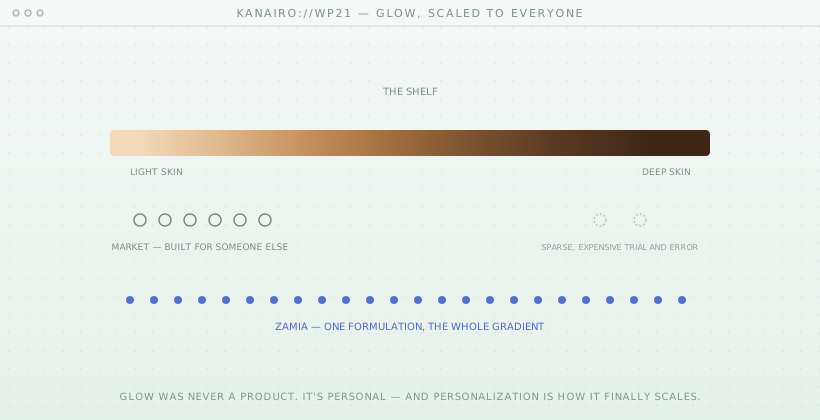
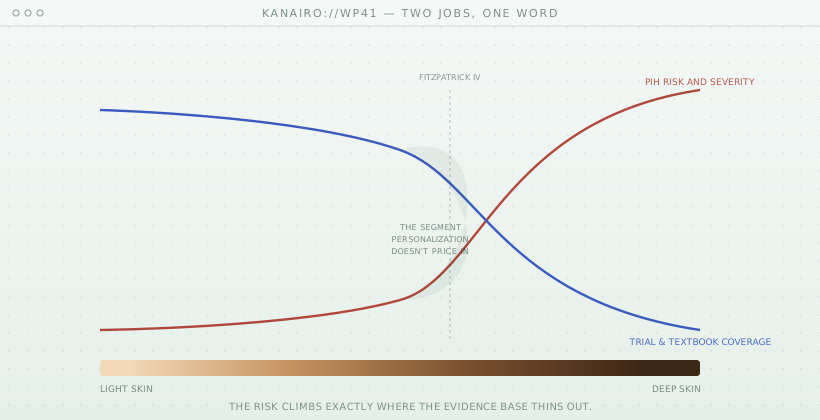
Skincare has sold "personalization" for a decade — quizzes, skin-type sliders, AI-matched routines — and most of what it delivers is cosmetic segmentation: oily or dry, budget tier, fragrance preference. Almost none of it is the specific personalization that melanin-rich skin actually needs, which is a routine matched against a documented, disproportionate risk: post-inflammatory hyperpigmentation (PIH), a complication that is measurably more common, more severe, and slower to resolve in darker Fitzpatrick phototypes. This paper traces that gap to its source. Dermatology's own trial base, textbook imagery, and — now — the image datasets training AI dermatology tools all underrepresent skin of color by a repeatedly measured margin. We argue that Zamia, Flux's AI skincare consultant, is a real attempt at the second, harder kind of personalization, deliberately "boxed" so a language model narrates while a fixed, vetted product-and-evidence engine decides. We do not treat that as self-evidently true. We hold Flux's own commercial stake in this conclusion up for scrutiny, take seriously the objection that "personalized skincare" is mostly marketing language borrowing the authority of science, and set out the regulatory line — cosmetic advice, not diagnosis — that a tool like Zamia has to stay on the right side of. We close with falsification conditions and an honest accounting of what the evidence does not yet show.