Writing

A numbered series on Africa's public institutions — what's broken, what works, and what the evidence says. Each paper carries a stable WP number and is citable from the Flux registry.

2026

WP35
The Second Question: What Changes When an Explainer Can Be Asked Again
Abstract

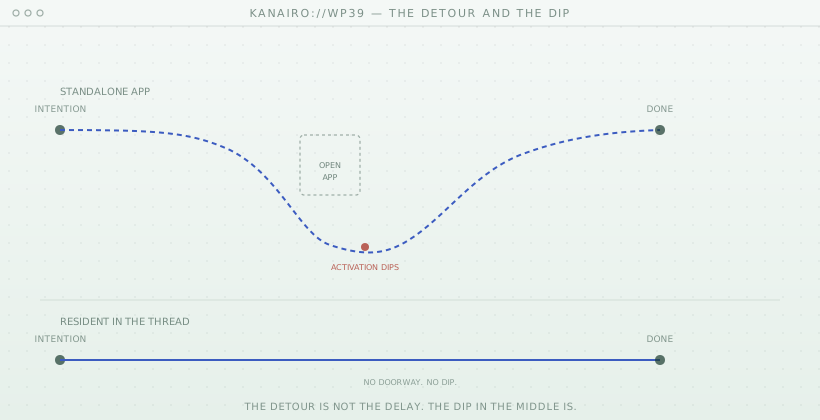
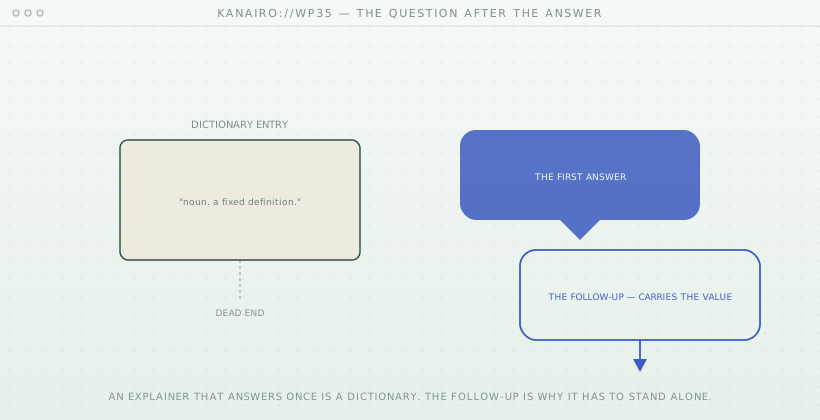
This is a first-person design account of building an in-place AI explainer, using it for months as a browser extension and as a local desktop application, and discovering that its defining feature was not the one it shipped with. A single-shot inline explanation resolves a word but rarely the confusion: the first answer raises the question actually worth asking, and a tool that cannot take that question sends users to a chat window to restate everything — removing the first tab and leaving the second. The paper argues that a follow-up which opens a panel or a separate surface forfeits the entire premise, so the real engineering problem is a conversation that grows without displacing the passage it is about. It makes a coherence argument for going standalone: an explainer that trains the expectation of an answer in place, then vanishes for PDFs, documents and messages, replaces a reliable habit with an unreliable one. It argues that the launcher pattern — the obvious route to system-wide availability — is the wrong interaction model, contrasting the two across five properties. The paper states honestly what is built and what is not, records how retiring the extension silently invalidated a pricing tier that depended on it, and sets out five checkable commitments for a standalone version, including treating the record of what a reader failed to understand as sensitive.

16 Aug
9 min
paper ↗
WP34
The Panel Is Also a Tab
Abstract

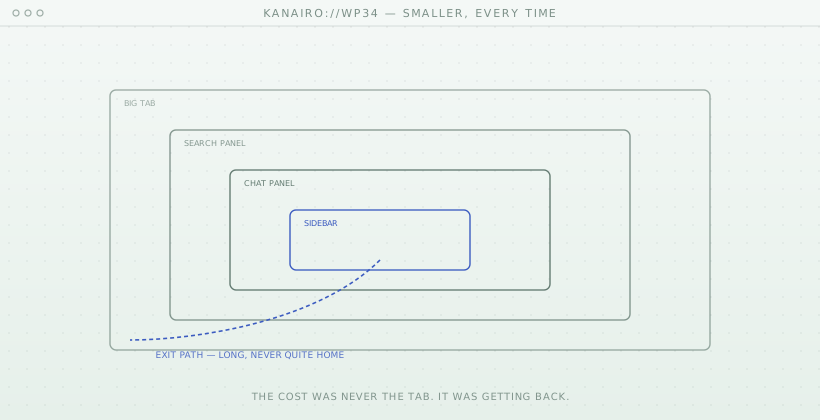
Mainstream AI answer surfaces converge on a single strategy for the mid-document lookup: bring the answer closer. Docked panels open beside the text, launcher overlays float above it, and search results increasingly compose the answer in place of an index. This paper argues that the first two solve the wrong half of the problem. The cost of interrupting a reading task to look something up is not the distance travelled but the re-entry — re-finding the sentence, reloading the argument, and recovering the reason you stopped — and a panel leaves re-entry fully intact while an overlay makes it worse by occluding the context needed to form the question. The paper specifies four conditions an answer must meet to genuinely not move the reader: context taken rather than retyped, anchoring at the selection, no displacement of the source, and dismissal without residue. It then argues that the cost of asking determines the shape of what gets asked: expensive switching produces one large question, while free follow-up produces several small and better ones. The claim is deliberately bounded — for sustained comparison, synthesis, or any case where the answer is itself the artifact, the persistent panel is correct. The argument runs on mechanism and first-person use rather than measurement, and the paper specifies the study that would settle it rather than citing figures it cannot defend.

16 Aug
10 min
paper ↗
WP33
What Dies on Election Night
Abstract

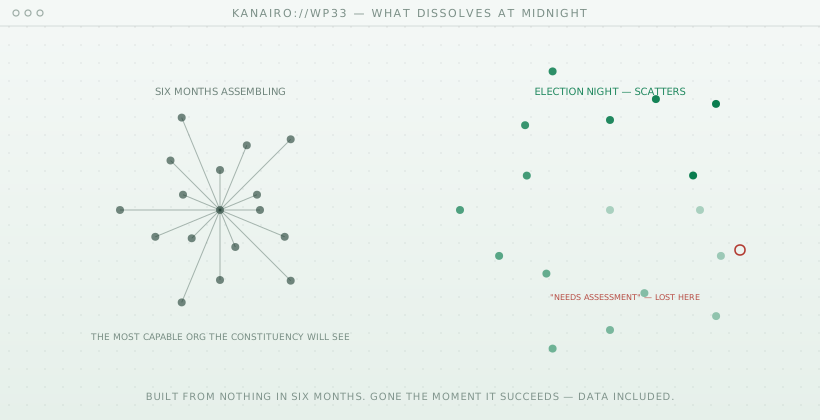
This paper argues that the periodic dissolution of electoral campaign organisations constitutes the principal source of institutional amnesia in Kenyan constituency governance. It observes that a competitive campaign for a parliamentary seat assembles, within approximately two quarters and typically from no prior institutional base, an operational capability exceeding that of the constituency office which succeeds it: sub-location-level field coverage, volunteer rosters numbering in the hundreds, daily logistics and finance functions, and a continuous stream of first-hand testimony regarding constituent needs. It contends that this last asset — effectively the largest informal needs assessment conducted in the country, however methodologically limited by self-selection and interviewer interest — is systematically discarded at the conclusion of each electoral cycle. The paper identifies three structural causes, none attributable to negligence: the legal and organisational separation of campaign vehicles from constituency offices, the seasonal dispersal of campaign personnel, and the absence of any structured format or receiving system into which unstructured campaign knowledge might be migrated. It further observes an inversion in what survives: benign and valuable needs data evaporates while sensitive contact data persists in undocumented form, a pattern the paper attributes to the absence of a designed continuity layer under the Data Protection Act, 2019. The paper concludes that the relevant intervention is continuity infrastructure rather than campaign effectiveness tooling, and proposes as a falsifiable test whether any Kenyan constituency office can commence a term holding a structured, sourced record of constituent requests from the preceding campaign.

25 Jul
8 min
paper ↗
WP32
Legible, Navigable, Writable: What Measuring a City Actually Costs
Abstract

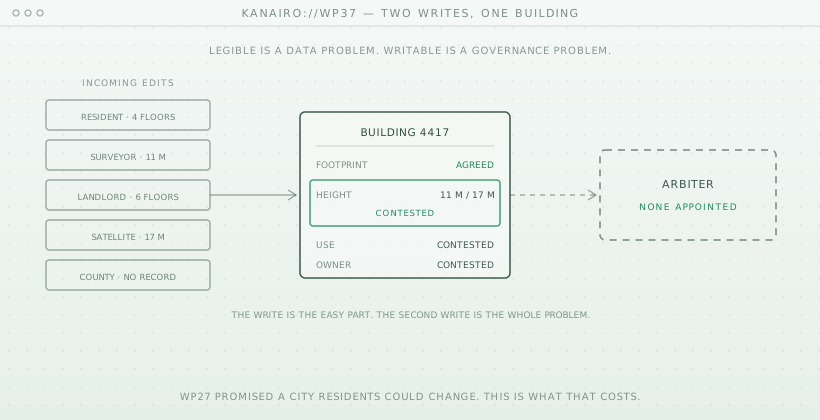
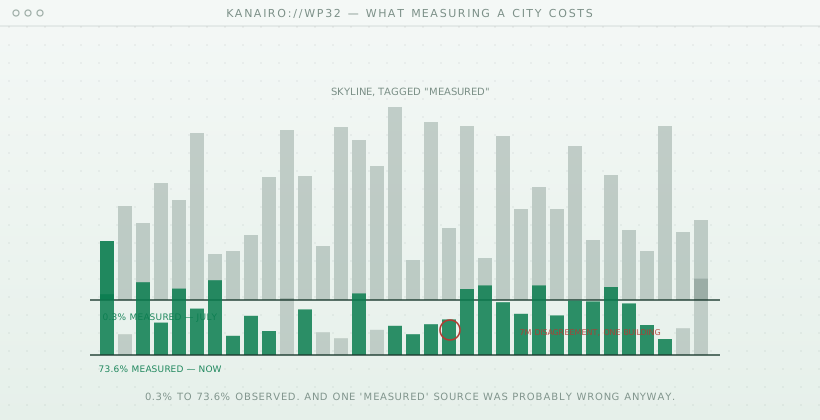
This paper reports the first quantitative result from the Nairobi digital twin programme: the replacement of heuristic building heights with heights measured from satellite imagery across the full metropolitan area. Using Google's Open Buildings 2.5D Temporal dataset, sampled inside each building's real footprint polygon, the proportion of buildings whose height derives from observation rather than inference rose from 0.3% (4,231 surveyed buildings) to 73.6% (1,019,096 of 1,384,206). The paper documents the pipeline — reading only decimated windows from 9.65 GB of Cloud-Optimized GeoTIFFs to produce a 16 MB working raster — and the empirical selection of the median-within-footprint estimator over alternatives. It then reports an unexpected result: validated against Overture Maps' own surveyed height attribute, the imagery heights show a 6.84 m mean absolute error, whereas independent peer-reviewed validation against ICESat-2 laser altimetry places the same dataset at 2.49 m for Nairobi. Having eliminated resampling artefacts as a cause, the paper argues that the discrepancy is attributable primarily to error in the surveyed attribute rather than the imagery, and that a dataset widely treated as authoritative is likely the weaker of the two sources. The paper draws a general conclusion for institutional data infrastructure: systems that store values without provenance cannot adjudicate between conflicting sources, and provenance is therefore a precondition for institutional reasoning rather than a documentation concern. It closes by locating the remaining work — the transition from a navigable model to a writable one — as an institutional rather than a technical problem.

25 Jul
10 min
paper ↗
WP31
Building Nairobi a Second Time: Notes From a Week of Shipping the Twin
Abstract

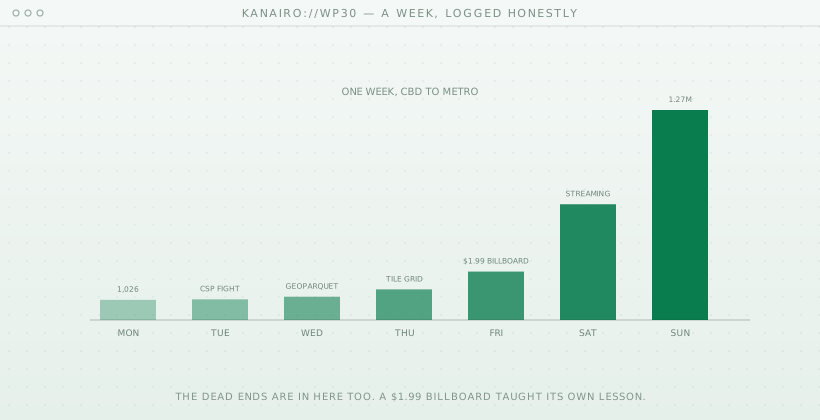
This is the informal companion to Working Papers on the v2 Nairobi buildings pipeline: a first-person process account of the week KaNairo went from roughly 1,000 central-business-district buildings to 1,277,511 across the full metropolitan area. It records the sequence as it actually happened — a Content-Security-Policy block that blanked the first map, duplicate SSL-certificate failures across two fetch scripts, an Overpass API rejection resolved by identifying ourselves properly, and the one genuinely easy step: the data itself, which Overture Maps served in minutes, free. It also records the finding that reframed the work (volunteer map coverage tracks prior attention, not the city — checked directly for Kibera and Mathare), and closes with three transferable lessons for builders attempting the same for other African cities: start from a small real product rather than a platform pitch; use merged data or inherit the attention bias of a single source; and label uncertainty visibly, because that is what buys the right to ship before knowing everything. Technical claims are documented in the three companion papers; this essay is the how-it-felt record the papers deliberately leave out.

13 Jul
7 min
paper ↗
WP30
Estimating What We Don't Know: A Confidence-Tiered Height Heuristic for Data-Sparse Cities
Abstract

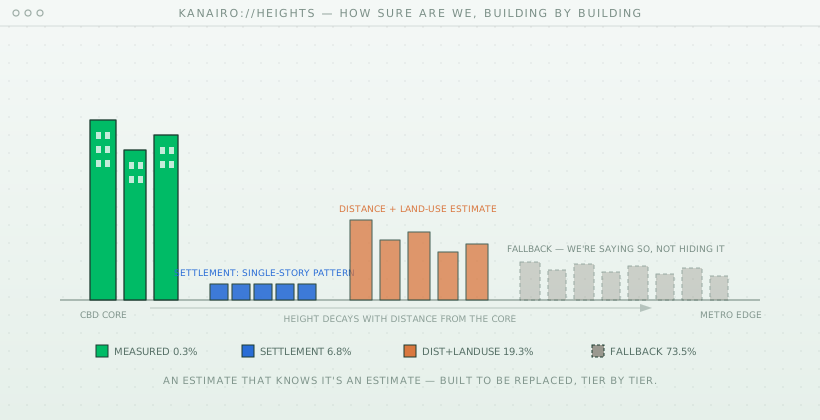
Building height is one of the most consequential and least available attributes in open urban geographic data for African cities. Querying Overture Maps' merged buildings layer for the Nairobi metropolitan area, we find that only 4,203 of 1,277,511 buildings (0.3%) carry a direct height or floor-count attribute from any contributing source. A validated remote-sensing alternative exists — Google's Open Buildings Temporal dataset, shown in peer-reviewed research to estimate Nairobi building heights to 2.5 meters mean absolute error — but requires Google Earth Engine infrastructure not yet provisioned for this project. Rather than leave height unset pending that integration, we built a deliberately provisional four-tier heuristic: direct measurement where available; a single-story estimate for buildings within known informal-settlement boundaries, grounded in established observations about Nairobi's informal housing stock; a distance-decay-from-city-core estimate modulated by Overture's land-use classification, on the standard urban-geography premise that building height correlates with distance from a commercial core; and a flat fallback for buildings matching none of the above. Applied to the full dataset, the tiers split 0.3% measured, 6.8% high-confidence, 19.3% medium-confidence, and 73.5% low-confidence fallback. We argue that labeling an estimate's confidence and publishing the unflattering distribution is preferable to a single undifferentiated height value that looks equally authoritative regardless of its actual basis, and describe the heuristic as designed for incremental replacement, tile by tile, as real height data becomes available.

13 Jul
7 min
paper ↗
WP29
Who's Missing From the Map: Building-Footprint Coverage Gaps in Nairobi's Informal Settlements
Abstract

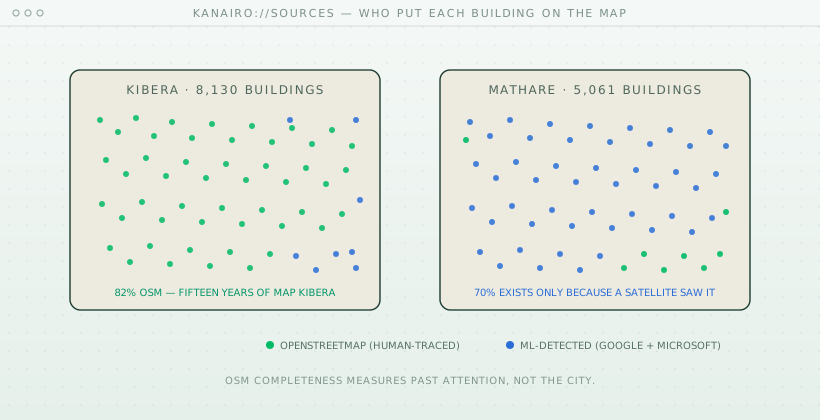
Prior research has established that OpenStreetMap building-footprint completeness varies sharply across Nairobi, with one study specifically noting that Mathare — one of the city's largest informal settlements — had no building footprints in OpenStreetMap at all as of its writing. This paper reports a direct empirical check of that claim against current data, and extends it to a second informal settlement, Kibera, chosen because it is the subject of a long-running, well-known volunteer mapping effort (Map Kibera, active since 2009). We queried Overture Maps' merged building layer — itself a combination of OpenStreetMap, Google Open Buildings, and Microsoft's ML Building Footprints — for both settlements and decomposed each building's source. In Kibera, OpenStreetMap now supplies 82% of mapped buildings (6,706 of 8,130); in Mathare, it supplies 16% (794 of 5,061), with Google's Open Buildings alone supplying 70%. We argue the difference is not explained by population, informality, or physical mapping difficulty — both settlements share all three — but by the presence or absence of a dedicated volunteer mapping campaign, meaning OpenStreetMap completeness in under-resourced urban areas is closer to a measure of prior philanthropic/NGO attention than a measure of the area itself. We conclude that any civic-technology project sourcing building data for African urban contexts should default to a merged, ML-supplemented dataset rather than OpenStreetMap alone, precisely because doing otherwise systematically undercounts the places least likely to have institutional attention in the first place.

13 Jul
6 min
paper ↗
WP28
From the CBD to All of Nairobi: A Tile-Streamed Building Pipeline for a City-Scale Twin
Abstract

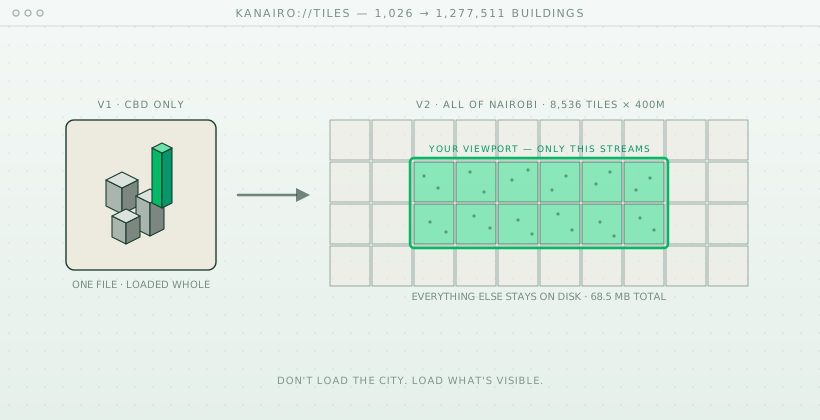
The first render of Flux's Nairobi digital twin covered roughly 1,000 buildings in the central business district, sourced from OpenStreetMap via the Overpass API and compressed into a single static bundle. This paper documents extending that render to the full Nairobi metropolitan area — approximately 1,600 square kilometers from Karen to Embakasi and Ruiru to Athi River — using Overture Maps, an open dataset that merges Google's Open Buildings (satellite-imagery-derived footprints), Microsoft's ML Building Footprints, and OpenStreetMap into a single deduplicated layer. The resulting extract contains 1,277,511 building footprints and 3,782 land-use features, roughly 1,250 times the building count of the original CBD-only extract. We describe why this scale cannot be loaded into a browser as a single static file the way the CBD extract was, and the tiling architecture built to stream it instead: a 400-meter grid stored as a flat SQLite file (8,536 tiles, 68.5MB), served through a Django endpoint and requested by the client only for the portion of the city currently in view. We report the pipeline's real performance characteristics, its deliberate exclusion from the production database used by other Flux services, and the specific respects in which it remains an unfinished foundation rather than a finished product — principally, that building heights are estimated rather than measured for all but a small fraction of the dataset, addressed separately in a companion paper.

13 Jul
8 min
paper ↗
WP27
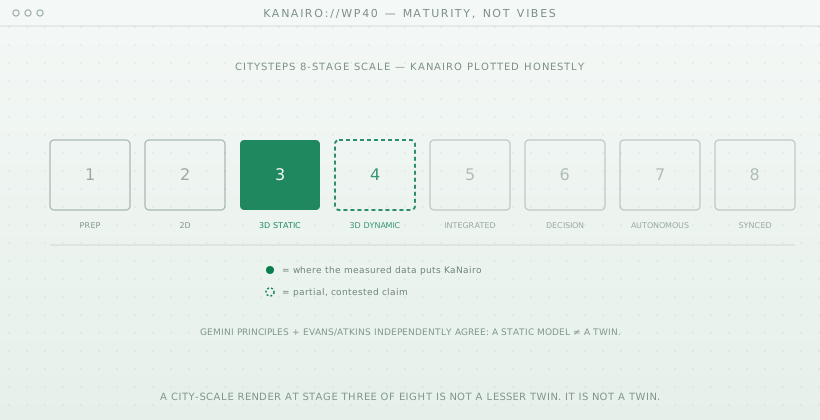
The Twin Nairobi Doesn't Have Yet
Abstract

"Digital twin" typically describes a 3D visualization exercise, yet the term originates from live-telemetry systems built to track one physical object's real condition, not from rendering fidelity. This paper argues a genuine 1:1 city twin needs two separate, so-far-unconnected halves. The first, institutional, is a live data-exchange layer between government systems, on the model of Estonia's X-Road — architected as a decentralized system after a 1996 data-consolidation scandal and now connecting over 450 institutions and 3,000 services under a "once-only" principle — with Nairobi's 2014 Digital Matatus project, which mapped over 130 informal transit routes into open transit data now used in Google Maps, presented as an existing partial precedent. The second, participatory, is a citizen-facing write interface, descended from a lineage running through Jay Forrester's 1969 Urban Dynamics and Will Wright's SimCity, and paralleled by Kenya's own Ushahidi (2008) and Nairobi's own MajiVoice utility-complaint system, UN-Habitat's Minecraft-based Block by Block co-design program, and academic digital-twin/participation projects in Helsinki and Rotterdam that researchers describe as "limited by design." No verified project has combined both halves persistently at full city scale, wired to real institutional dispatch. Using KaNairo — Flux's explorable 3D model of Nairobi, with a real, paid joke billboard as its first citizen-facing interaction — as a live case, the paper argues that closing both gaps, sector by sector, is the actual roadmap, and that the render and the billboard are the honestly-labeled first steps of a much longer build, not the finish line.

8 Jul
22 min
paper ↗
WP26
The Personal Operating Layer: The Case for an AI That Lives in Your Messages
Abstract

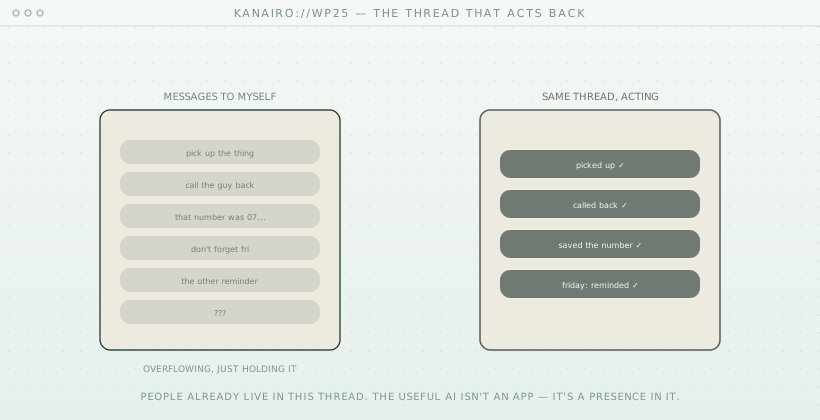
People already run their lives inside chat threads — texting themselves, keeping solo group chats as running records. This paper argues that the most useful personal AI will not be an application one opens but a presence in the message thread that talks like a friend, acts on the user's behalf, and holds them to their own goals. It frames this as the missing-layer thesis applied to an individual life.

28 Jun
13 min
paper ↗
WP25
The Operating Workforce: An African-First Theory of AI Employees
Abstract

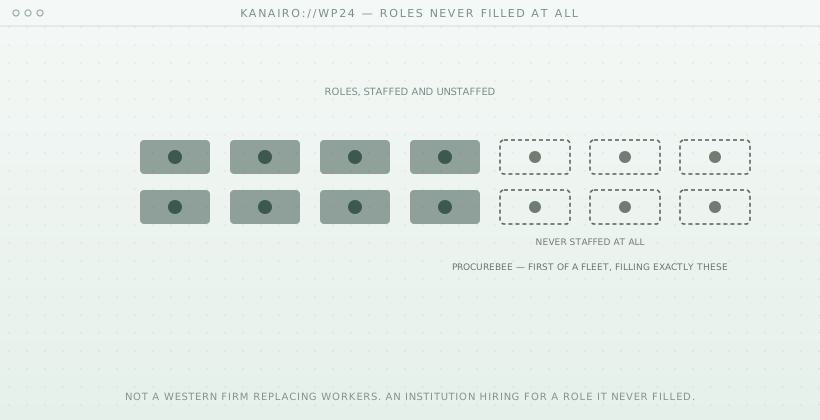
The phrase 'AI employee' typically evokes a Western firm replacing expensive knowledge workers. This paper argues the African case inverts that picture: AI employees will first fill roles institutions never managed to staff at all. Building on the missing-layer thesis, it develops an African-first theory of the operating workforce — role-scoped, accountable agents that do an institution's routine, rules-bound work — and presents procurement as the first such role.

25 Jun
19 min
paper ↗
WP24
Snakes And Ladders: Extra Life
Summary

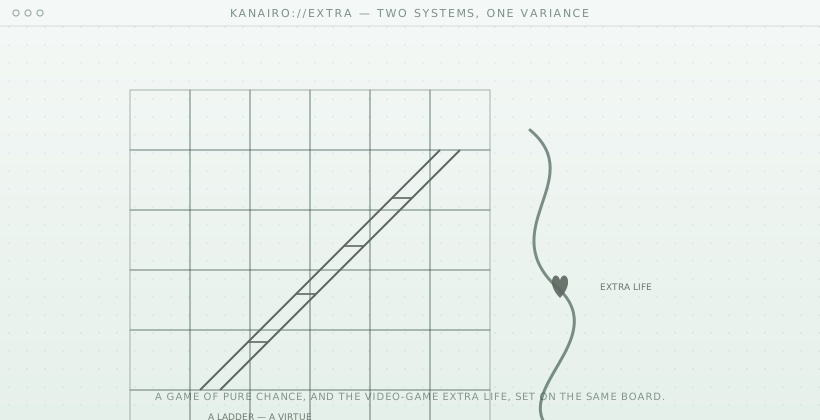
A note ahead of the paper: Snakes and Ladders is a game of pure chance, descended from an Indian morality game whose ladders were virtues and whose snakes were vices. The paper sets that board beside the video-game extra life.

21 Jun
2 min
paper ↗
WP23
The Institutional Gap Is the Feature
Abstract

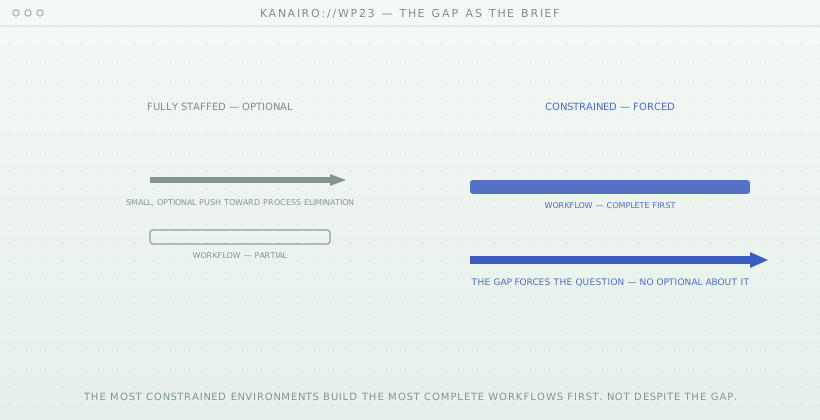
This paper argues that the most constrained environments will build the most complete AI workflows first — not from any technological advantage, but because the question of which processes to eliminate is forced rather than optional where capacity is scarce. The institutional gap, on this account, is not the barrier to adoption but the brief for it.

13 Jun
9 min
paper ↗
WP22
Your NGO Is Illegal and That Is Not Your Fault
Abstract

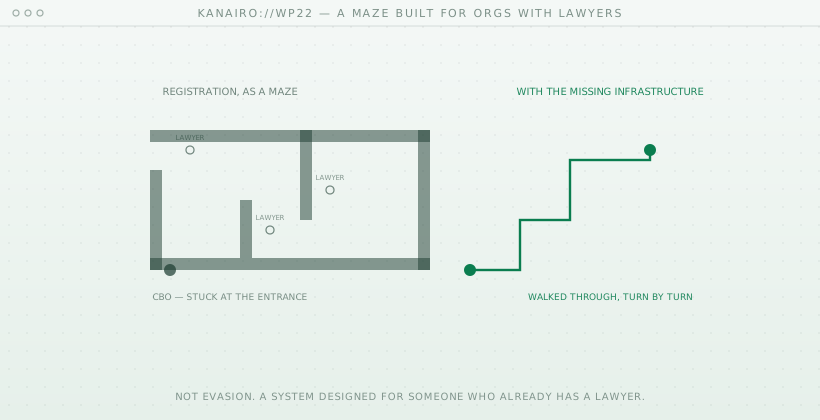
Kenya's civil-society compliance gap is often read as organisations evading registration. This paper argues it is better understood as the product of a registration system designed for organisations with lawyers, and examines what changes once the infrastructure to navigate that system finally exists.

10 Jun
10 min
paper ↗
WP21
Personalized Is the New Glow
Abstract

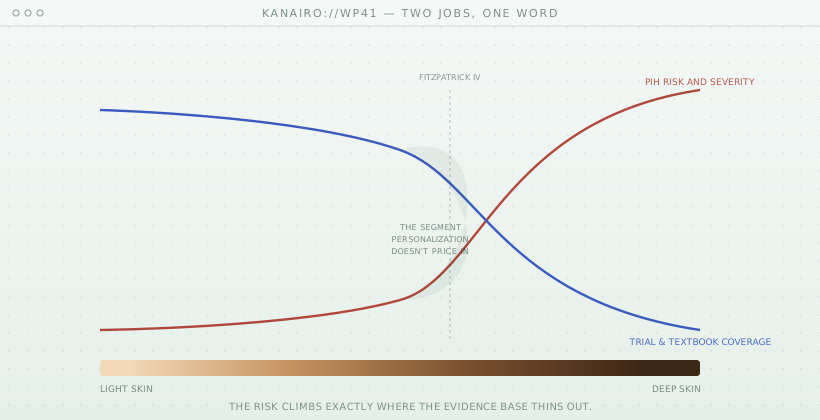
Healthy skin is personal, yet for deep-skinned consumers the market has long sold products built for someone else, leaving expensive trial and error in its place. This paper argues that personalization is the next form of the promise the beauty market has always made, and presents it as the mechanism by which that promise finally scales.

10 Jun
6 min
paper ↗
WP20
Accountability Is Not a Reason to Keep Humans in the Process
Abstract

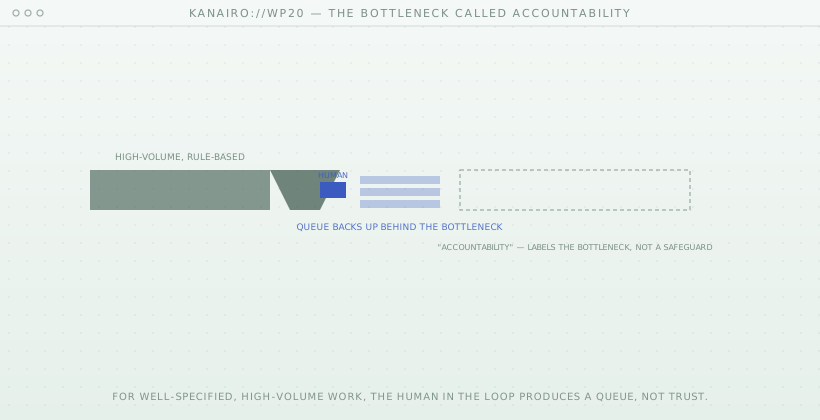
For well-specified, high-volume, rule-based processes, this paper argues, human involvement does not produce accountability so much as a bottleneck. It frames the reflex to keep a human in the loop as the institutionalisation of distrust in systems never designed well enough to deserve trust, and argues that better-designed, auditable systems make that reflex obsolete.

9 Jun
9 min
paper ↗
WP19
Your AI Strategy Is Digital Transformation With Better Branding
Abstract

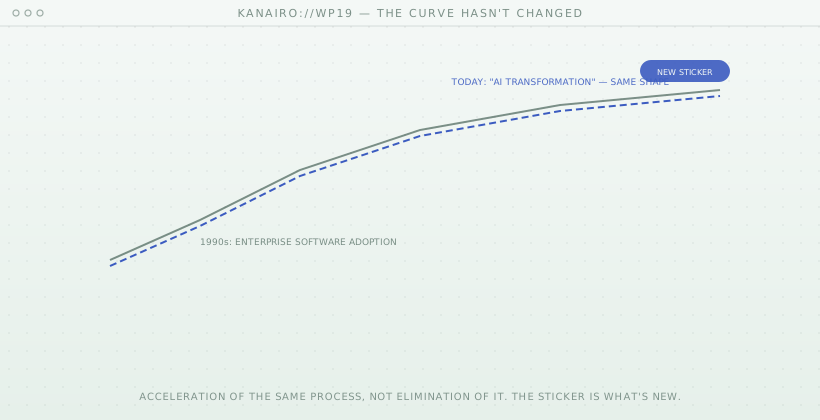
Most initiatives branded as AI transformation accelerate existing processes rather than eliminating them — a pattern this paper argues is identical to 1990s enterprise software. It contends that the organisations that will actually transform are those that ask which processes should cease to exist, not how to perform unchanged work faster.

5 Jun
7 min
paper ↗
WP18
The Expense Report Was Never About Expenses
Abstract

The expense report is among the most resented instruments of corporate administration. This paper argues that understanding what it is actually for — a control mechanism for delegated spending — is the prerequisite for seeing why agentic payment infrastructure makes it obsolete, replacing after-the-fact reconciliation with scoped authorisation.

1 Jun
8 min
paper ↗
WP17
Did It Do It For You?
Abstract

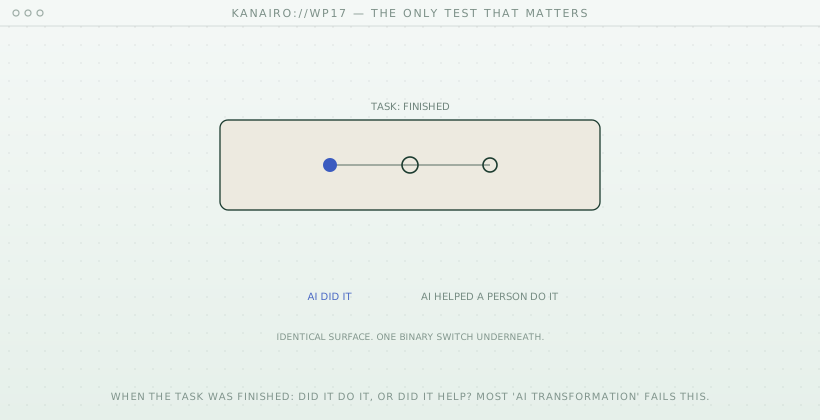
This paper offers a manifesto for workflow-native AI built on a binary test: when a task was finished, did the AI do it, or merely help a person do it? It argues that most of what is called AI transformation fails this test, explains why the distinction is decisive rather than rhetorical, and describes what it means to build software that passes it.

28 May
11 min
paper ↗
WP16
Africa's Regulatory Failure Is Not a Law Problem
Abstract

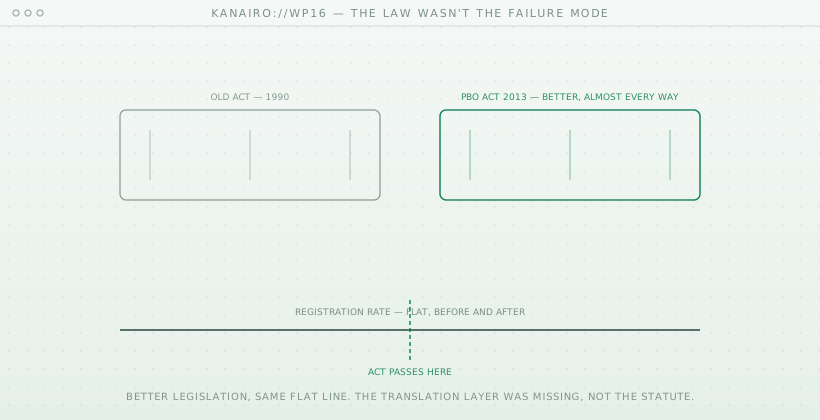
Kenya's PBO Act improved on its predecessor in nearly every respect, yet registration rates did not meaningfully rise. This paper argues that the recurring failure mode in African regulatory reform is rarely the quality of the law itself but the absence of a translation layer that makes the law navigable to those it governs.

24 May
8 min
paper ↗
WP15
Your Donor Is Now Your Regulator
Abstract

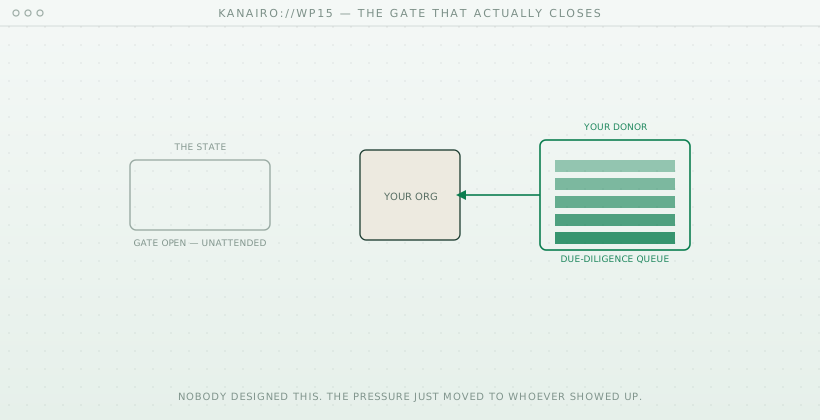
International donors' due-diligence requirements increasingly impose compliance pressure that the Kenyan state itself has never consistently applied. This paper argues that the organisations least able to meet these requirements are often those doing the most essential ground-level work, producing an unintended regulatory effect that nobody designed. Understanding the mechanism, it argues, is the first step to addressing it.

20 May
8 min
paper ↗
WP14
What a Language Model Finds When It Reads Your Constitution
Abstract

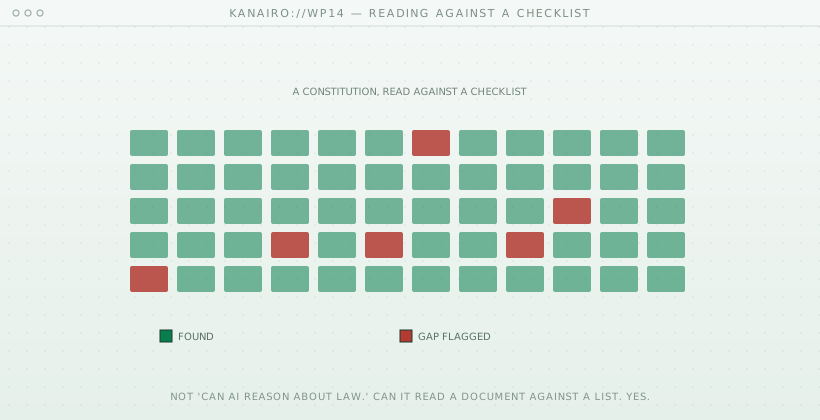
Discussion of AI and law fixates on whether AI can reason about law. This paper argues that a more tractable problem is already solved: reading a document against a specific checklist to identify gaps. Using the example of constitutive documents checked against statutory requirements, it shows what reliable document-versus-checklist analysis can do today and why it matters for compliance.

16 May
8 min
paper ↗
WP13
Kenya's PBO Act Is Finally in Force After a Decade. Most Organisations Still Cannot Comply.
Abstract

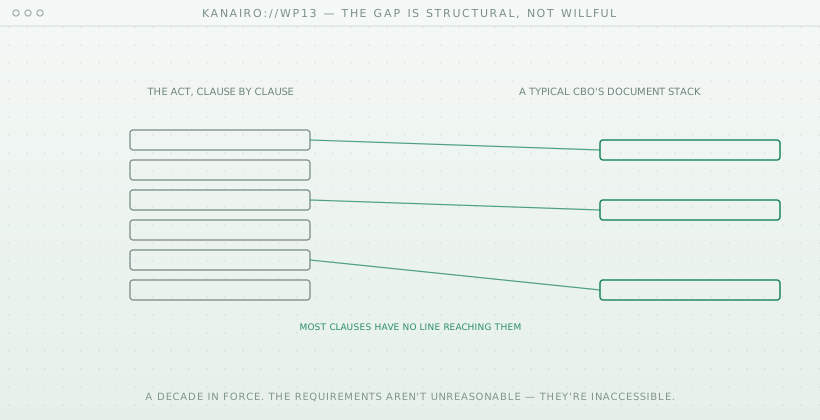
Kenya's Public Benefit Organizations Act came into force after more than a decade of delay, yet most organisations still cannot comply. This paper argues the Act's requirements are not unreasonable but inaccessible, walking through what compliance actually demands and showing that the gap between what the law requires and what a typical community-based organisation has is structural rather than a matter of intent.

12 May
10 min
paper ↗
WP12
The Agentic Buyer and the End of Dark Patterns
Abstract

The SaaS pricing page is less a disclosure of cost than an attempt to shape the buyer's decision. This paper argues that an AI procurement agent, lacking the psychological vulnerabilities those pages exploit — anchoring, social pressure, manufactured urgency — will restructure B2B software pricing structurally rather than incrementally, and considers what vendor strategy looks like when the buyer cannot be manipulated.

2 May
12 min
paper ↗
WP11
The Corporate Card Was Never the Solution
Abstract

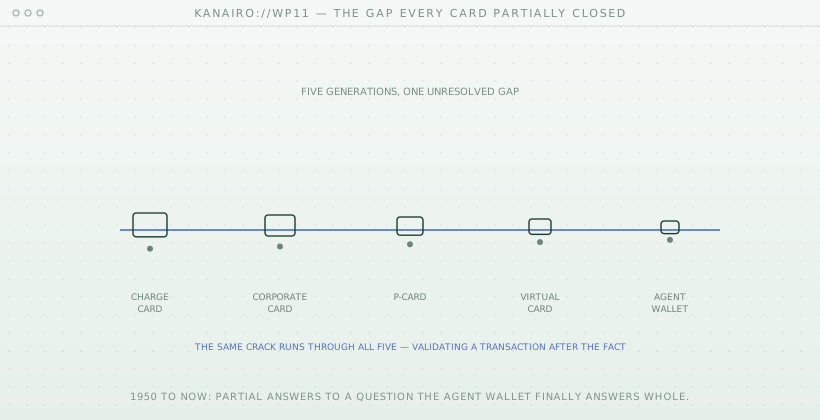
From charge cards to virtual cards, every procurement instrument since 1950 has been a partial answer to one trust problem: how to authorise a specific transaction without manually validating every purchase after the fact. This paper traces that lineage and argues that agentic payment infrastructure represents the first complete answer, shifting authorisation from after-the-fact review to scoped, programmatic intent.

2 May
11 min
paper ↗
WP10
Your Knowledge Gaps Are the Most Intimate Data You Have
Abstract

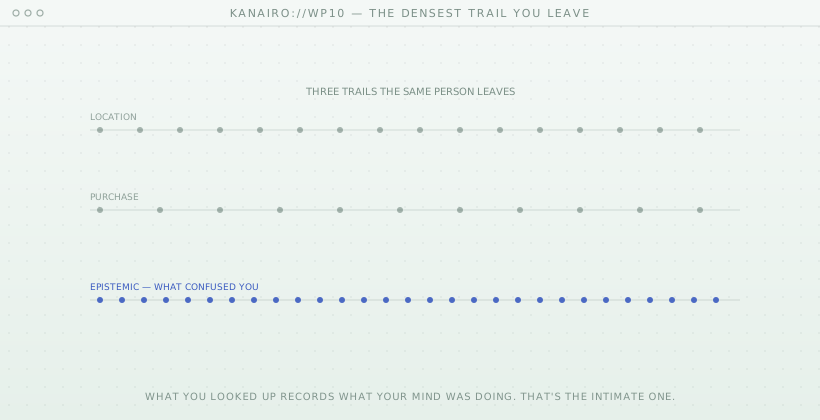
Behavioural data is usually discussed in terms of location and purchases. This paper introduces epistemic data — the record of what a person looked up, what confused them, and where their understanding ran out — and argues it is more intimate than other categories because it records the activity of the mind. It warns that the tools being built to help people read sit precisely at the centre of this data and examines the resulting privacy stakes.

2 May
12 min
paper ↗
WP09
The Web Was Built for Navigation, Not Comprehension
Abstract

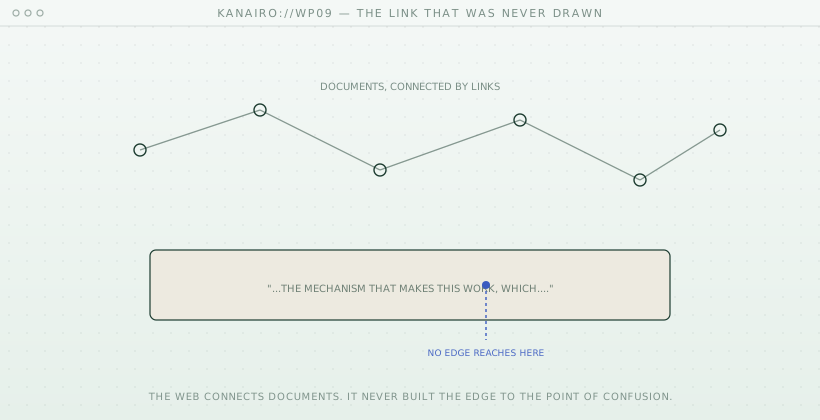
The hyperlink is a navigation primitive: it connects documents but cannot bring an explanation to the reader inline, at the point of confusion, without a context switch. This paper argues that the web delivered unprecedented access to knowledge while never building the layer that helps people understand it, and considers what a comprehension layer — explanation at the point of need — would require.

2 May
13 min
paper ↗
WP08
Procuring the Unspecifiable: Why Institutional Software Procurement Is Broken in Kenya
Abstract

Kenya's Public Procurement and Asset Disposal Act treats software as a commodity that can be fully specified in advance, compared by price, and delivered on a fixed date. This paper argues that this assumption is mismatched to how software is actually built, producing a predictable cycle of failed systems, vendor capture, and fraud-enabling infrastructure. It argues for reconceiving software as a distinct category of public acquisition with iterative delivery and long-term stewardship.

25 Apr
20 min
paper ↗
WP07
The Last Mile of Care: What Kenya's Community Health Workers Are Missing
Abstract

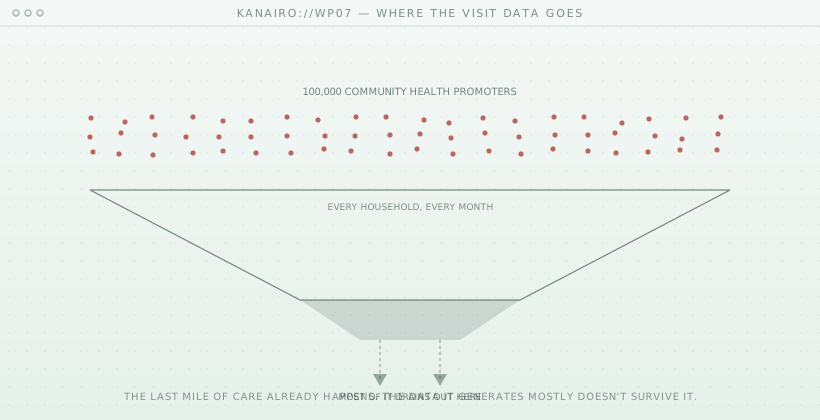
Kenya fields roughly 100,000 Community Health Promoters who visit households monthly, yet much of the data they collect does not reach a usable system. This paper examines the last-mile gap in community health and describes what a well-instrumented community-health system would look like — one that captures, transmits, and acts on household-level data rather than letting it disappear.

11 Apr
10 min
paper ↗
WP06
The Offline-First Problem: Why Most Institutional Software Fails in the Field
Abstract

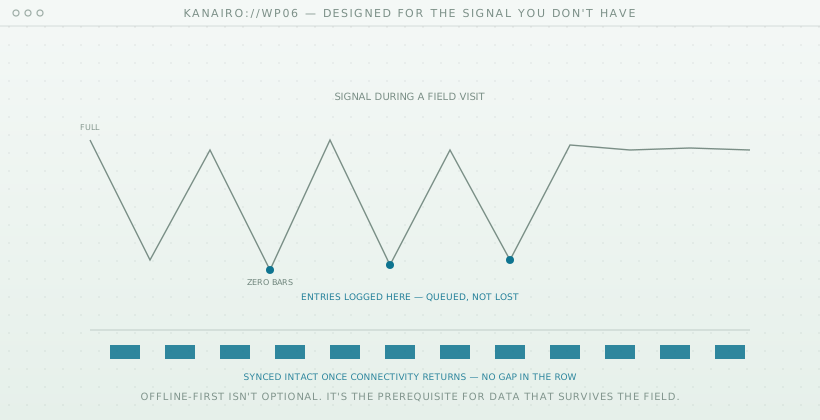
Most institutional software deployments in African field settings fail for a shared reason: they assume continuous connectivity that does not exist where they are meant to operate. This paper argues that offline-first architecture is not an optional feature but a prerequisite for data integrity — a system that loses or degrades data when the network drops produces worse operational intelligence than none. It frames connectivity assumptions as a requirements failure that precedes any line of code.

28 Mar
9 min
paper ↗
WP05
Democracy Is Infrastructure
Abstract

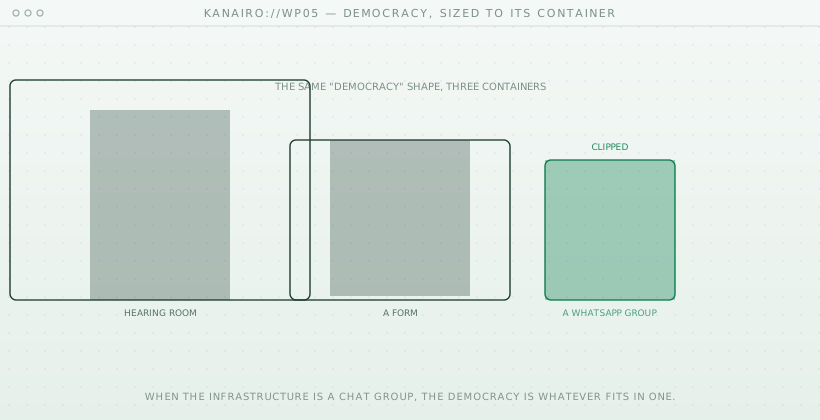
Democracy is usually discussed as a matter of values and ideals. This paper argues that in practice democracy is constituted by the infrastructure it runs on: when the operational substrate of a civic process is an ad-hoc messaging group, the democracy is whatever fits in that container. It makes the case that improving democratic practice in African contexts is substantially a problem of building better civic infrastructure.
14 Mar
8 min
paper ↗
WP04
Why Africa Needs Stablecoin Rails Before It Needs a Digital Currency
Abstract

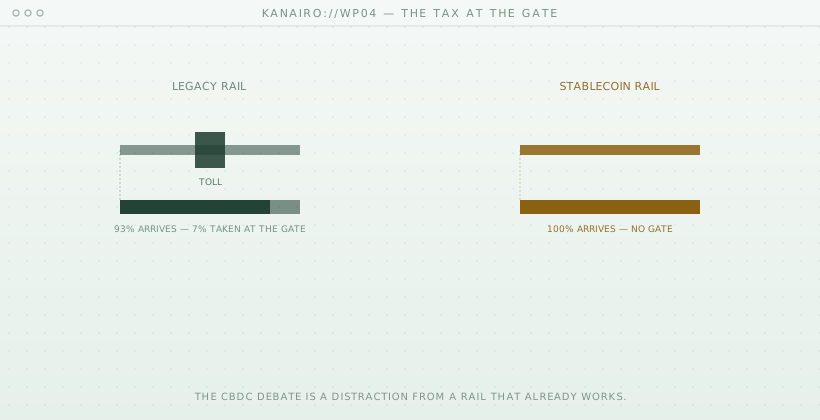
Debate over central bank digital currencies has dominated African monetary-technology policy. This paper argues that debate is a distraction from a nearer-term need: stablecoin-native payment rails that route around the costs the legacy correspondent-banking system levies on cross-border transfers. It distinguishes retail digital currency from institutional payment infrastructure and argues the latter is both more tractable and more urgent.

26 Feb
8 min
paper ↗
WP03
What Happens When Institutions Can Finally See Themselves
Abstract

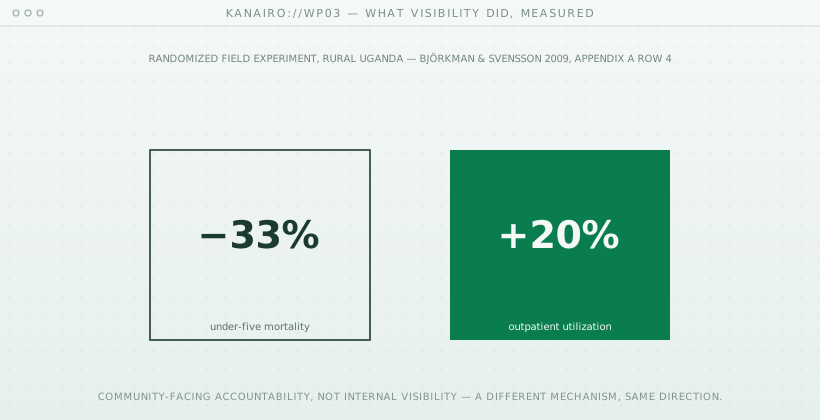
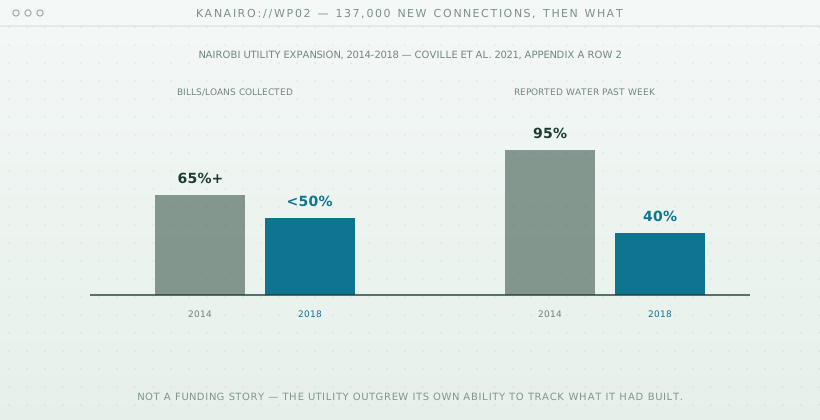
What changes when an institution can finally see itself? This paper explores the consequences of operational visibility: a utility that tracks its own production and losses in real time, a constituency office that knows the status of every case. It argues that visibility is not an end in itself but the precondition for correction, accountability, and trust, and sketches the shifts in management and legitimacy that follow once institutions can observe their own work.

12 Feb
8 min
paper ↗
WP02
Africa's Institutions Don't Have a Funding Problem
Abstract

Conventional accounts attribute the underperformance of African public institutions to inadequate funding. This paper contends the deeper failure is the absence of tools built for their actual operating context: software has been imported rather than designed for local constraints. Resources are necessary but not sufficient; the relevant technology already exists; the unmet task is building it for here. The argument reframes institutional failure as a problem of design and translation rather than of budget.

28 Jan
12 min
paper ↗
WP01
The Missing Layer: Why Africa's Institutions Operate Blind
Abstract

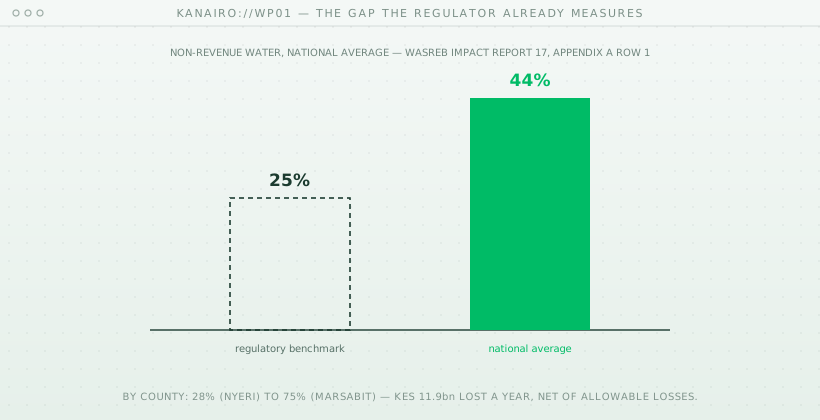
African public institutions are widely held to fail for want of funding, mandates, staff, or data. This paper argues the binding constraint is instead an operational layer: the instrumentation that lets an institution observe its own functioning in real time. Lacking it, institutions operate blind — unable to see what they did yesterday or correct their own drift. Setting out the founding thesis of Flux, the paper characterises this missing layer, distinguishes it from mere data abundance, and argues that the technology to supply it now exists and is affordable, leaving translation to the African institutional context as the real work.

10 Jan
12 min
paper ↗