The lab notebook
Writing.
We write the argument before we build the product. These are the arguments.
Working Papers registry · Glossary · Cite all (BibTeX)
Oct 2026 · 7 min
43Système D as Infrastructure: Nineteen Nairobi Workarounds and the Research That Already Explains Them
Jugaad, Système D, and resilience engineering’s work-as-done/work-as-imagined gap are three literatures describing one phenomenon. A 19-entry field-guide taxonomy of Nairobi workarounds, read against all three, as a small structured dataset rather than only a narrative.
Oct 2026 · 32 min
42Only the Date Is Settled
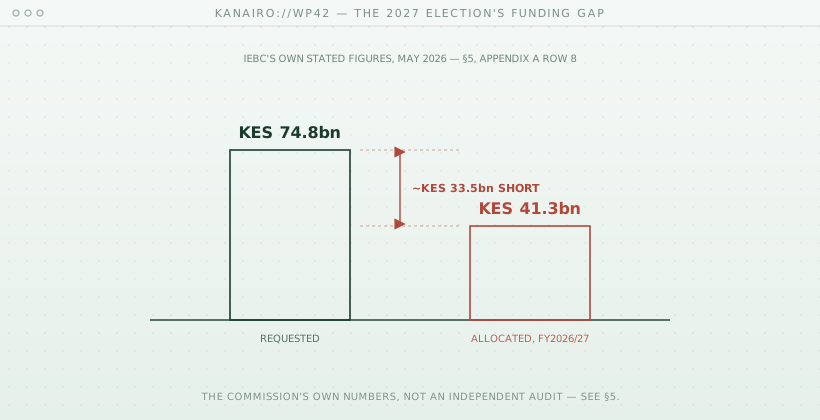
Ten months before Kenya's 2027 election, the one verifiable fact is the gazetted date. The commission, the voting-kit tender, the voter roll, boundary review, and political-data enforcement are each contested, unresolved, or unverifiable.
Sep 2026 · 36 min
41Stage Three of Eight
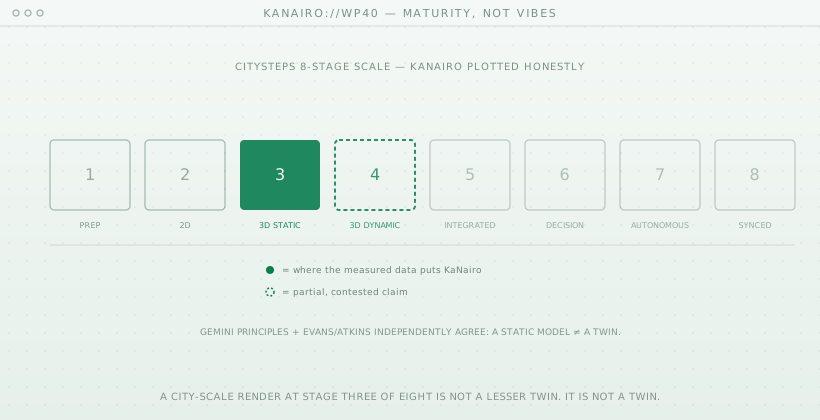
Checked against three published digital-twin maturity frameworks, KaNairo lands at "3D static/dynamic" — a good measured model, not yet a twin — and the reason is a nameable, structural one: Nairobi's own institutions don't yet produce the machine-readable data a twin needs.
Sep 2026 · 30 min
37The Layer Nobody Is Paid to Build
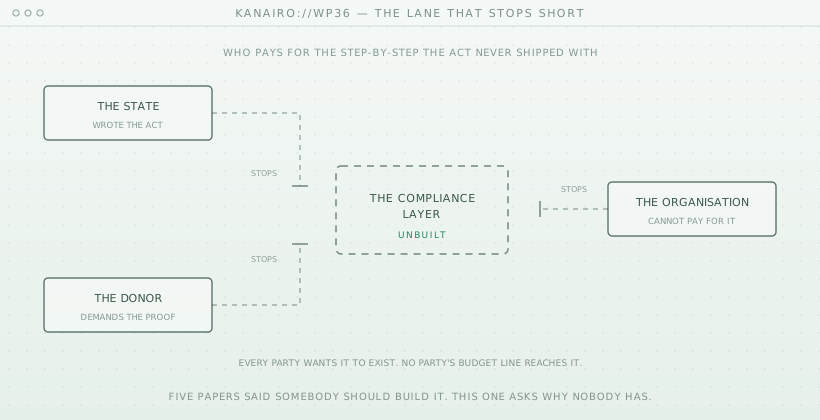
Five papers said somebody should build the PBO compliance layer. This one asks why nobody has — and finds a budget problem, not a technology problem. A court then removed the fee, and the queue still did not clear.
Sep 2026 · 24 min
36Who Gets to Say It's There
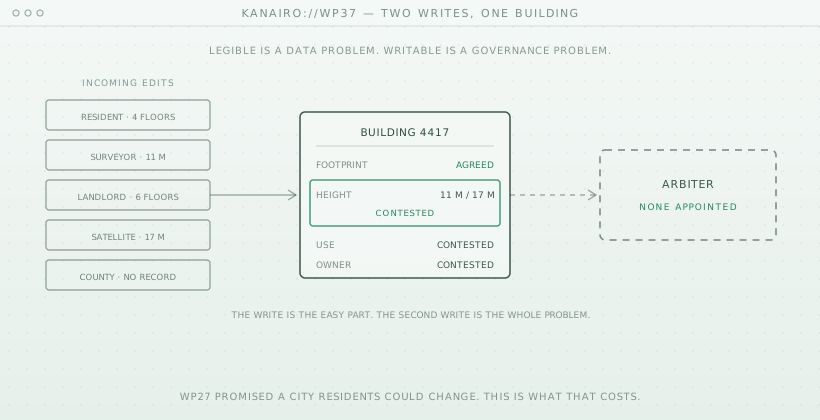
This series promised a city residents could change, then spent six papers measuring it. The write is easy. Deciding who gets to say it's there is a governance commitment, not a feature.
Jul 2026 · 27 min
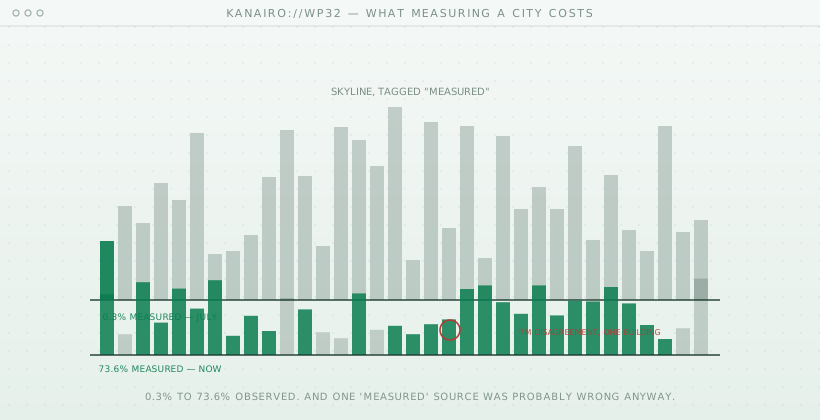
33Legible, Navigable, Writable: What Measuring a City Actually Costs
We measured 73.6% of Nairobi's buildings for free. Building the institution that would have measured them the conventional way has a documented price: about $70 million, which Kenya has not found twice in twenty years of trying.
Jul 2026 · 22 min
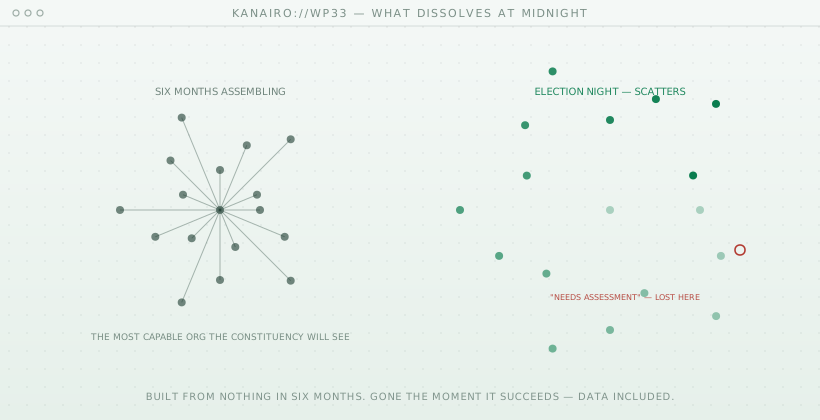
32What Dies on Election Night
A Kenyan campaign is the most operationally capable organisation most constituencies will ever have. It is built from nothing in six months and dissolved the moment it succeeds — taking the country's largest needs assessment with it.

Jul 2026 · 23 min
31From the CBD to All of Nairobi: A Tile-Streamed Building Pipeline for a City-Scale Twin
1,026 CBD buildings became 1.27 million metro-wide, streamed tile by tile from three merged datasets that a 2024 peer-reviewed study finds are "not interchangeable" — completeness bought, accuracy not yet claimed.

Jul 2026 · 23 min
30Estimating What We Don't Know: A Confidence-Tiered Height Heuristic for Data-Sparse Cities
73.5% of Nairobi's modeled building heights were honest guesses. A fresh literature search found the paper's own best-grounded guess — informal settlements are single-storey — is wrong for a documented, specific minority of buildings.
Jul 2026 · 21 min
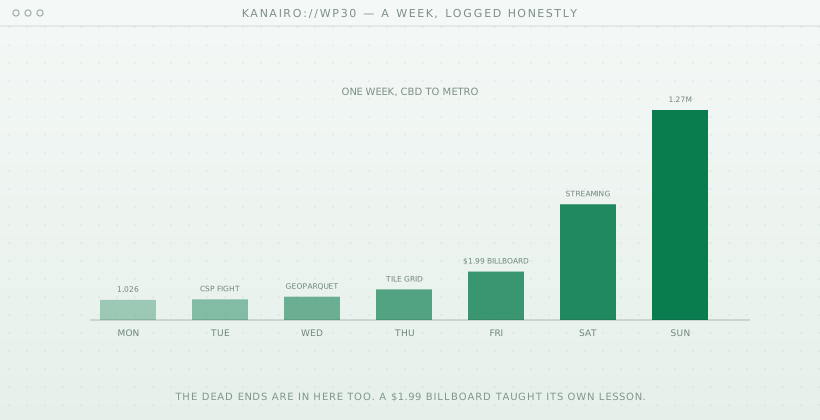
29Building Nairobi a Second Time: Notes From a Week of Shipping the Twin
The diary of the week KaNairo went from 1,026 buildings to 1.27 million — the CSP fights, the $1.99 billboard, and what we got wrong about how easy "measure the heights properly" would turn out to be.

Jul 2026 · 22 min
28Who's Missing From the Map: Building-Footprint Coverage Gaps in Nairobi's Informal Settlements
Kibera: 82% of its buildings are human-mapped. Mathare: 16%. The difference is not population or need — it is whether a settlement ever had a named, sustained, resident-led mapping campaign.

Jul 2026 · 22 min
27The Twin Nairobi Doesn't Have Yet
We let people pay $1.99 for a joke billboard in a toy 3D Nairobi. It's a working model of the real feature: a twin residents can act on, not just admire — and what "1:1" actually requires.
Jun 2026 · 29 min
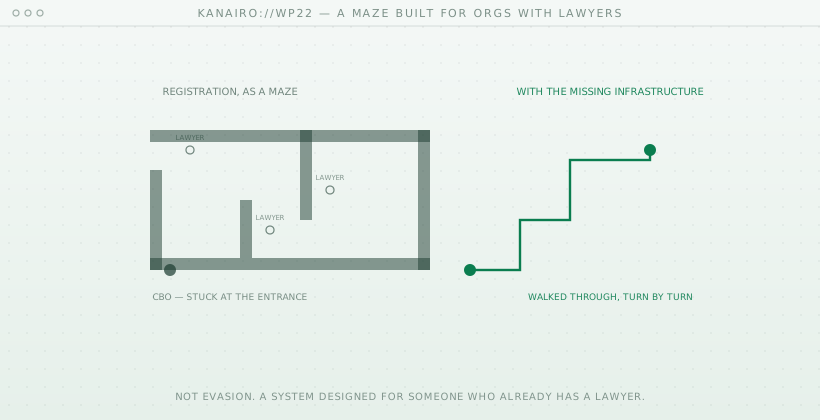
21Your NGO Is Illegal and That Is Not Your Fault
Kenya's civil society compliance gap is not a story about organisations evading registration. It is a story about a registration system designed for organisations with lawyers — and what changes when the infrastructure to navigate it finally exists.
May 2026 · 23 min
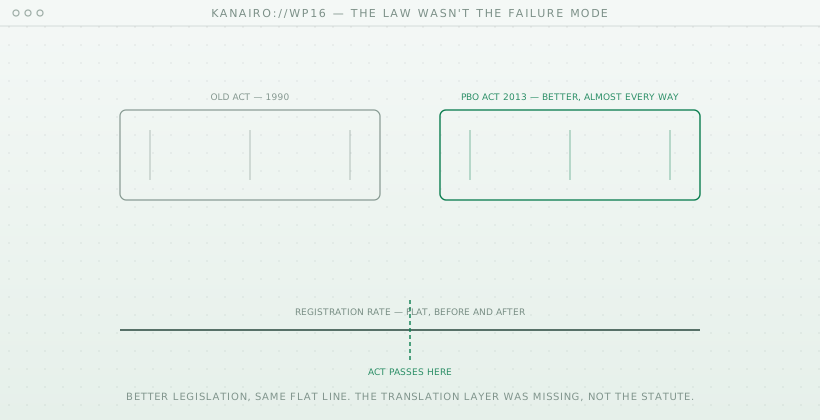
16Africa's Regulatory Failure Is Not a Law Problem
The PBO Act 2013 is better legislation than what it replaced in almost every respect. Registration rates did not meaningfully improve after it passed. The failure mode in African regulatory reform is almost never the quality of the law. It is the absence of the translation layer that makes the law navigable.
May 2026 · 21 min
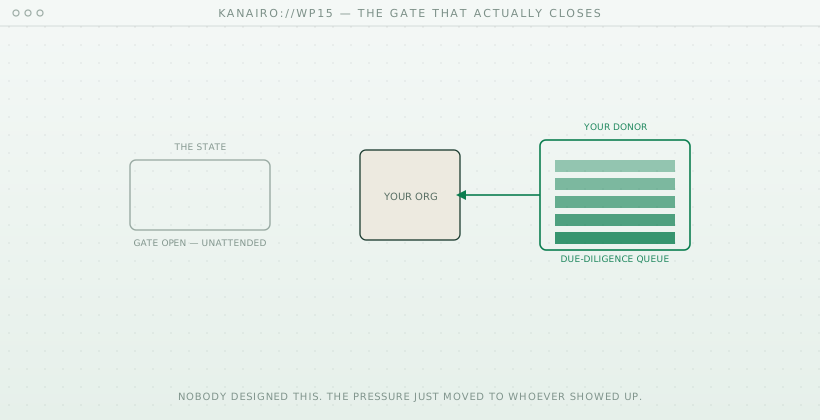
15Your Donor Is Now Your Regulator
International donors' due diligence requirements are producing compliance pressure the Kenyan state has never consistently applied. The organisations that cannot meet them are increasingly the ones doing the most essential ground-level work. Nobody designed this outcome. Understanding it is the first step to addressing it.
May 2026 · 22 min
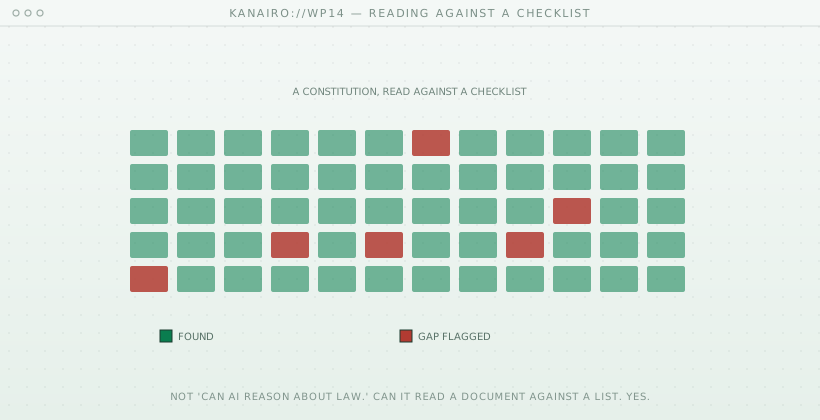
14What a Language Model Finds When It Reads Your Constitution
The AI and law conversation is fixated on the hard problem — can AI reason about law? It has missed the tractable problem that is already solved: can AI read a document against a specific checklist and identify gaps? The answer is yes. This is what PBOMaster does, and what it finds.
May 2026 · 31 min
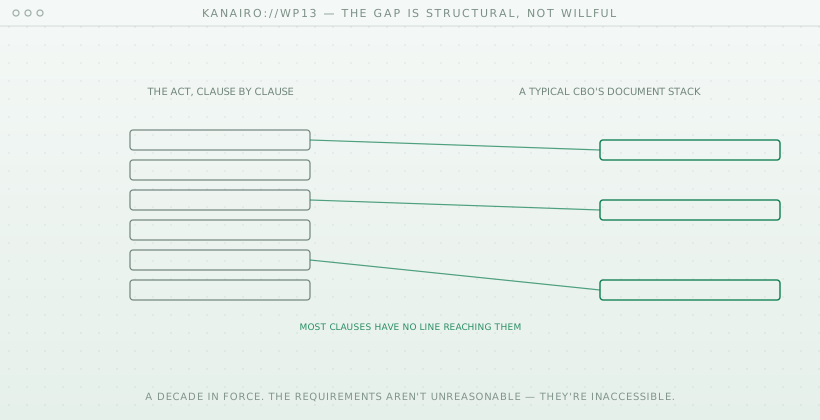
13Kenya's PBO Act Is Finally in Force After a Decade. Most Organisations Still Cannot Comply.
The PBO Act's requirements are not unreasonable. They are inaccessible. This essay walks through what compliance actually demands — clause by clause — and explains why the gap between what the law requires and what a typical CBO has is structural, not intentional.
Apr 2026 · 20 min
8Procuring the Unspecifiable: Why Institutional Software Procurement Is Broken in Kenya
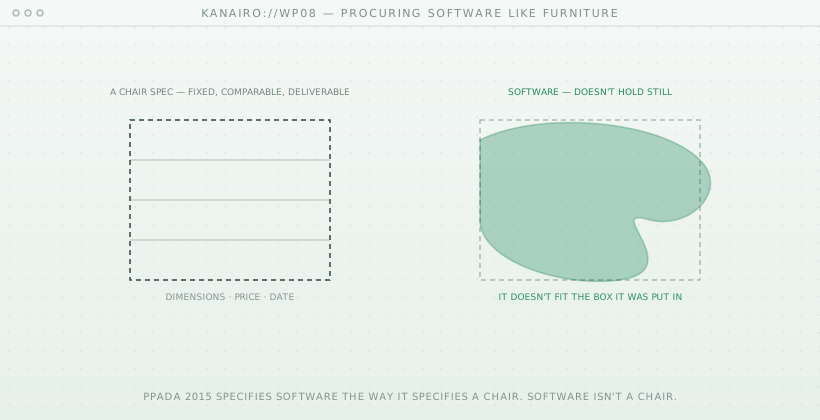
Kenya's PPADA 2015 treats software like office furniture — specifiable in advance, comparable by price, deliverable on a fixed date. The result is a predictable cycle of failed systems, vendor capture, and fraud-enabling infrastructure. This essay argues for reconceptualising software as a distinct category of public acquisition.
Mar 2026 · 24 min
5Democracy Is Infrastructure
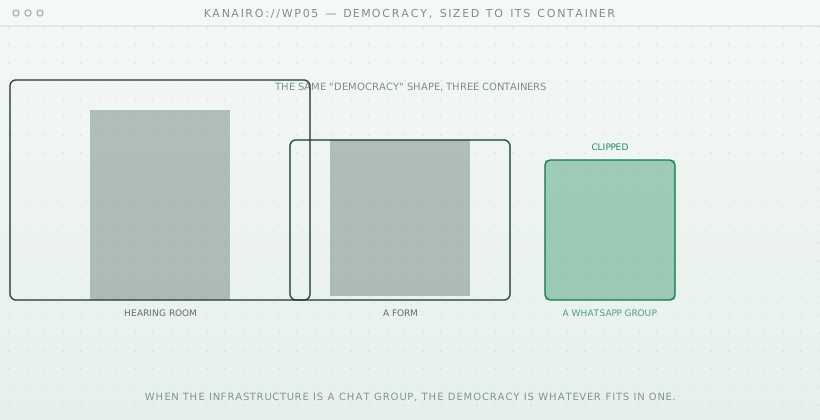
We talk about democracy as values and ideals. But in practice, democracy is what runs on the infrastructure. When the infrastructure is a WhatsApp group, the democracy is whatever fits in one.
Feb 2026 · 23 min
3What Happens When Institutions Can Finally See Themselves
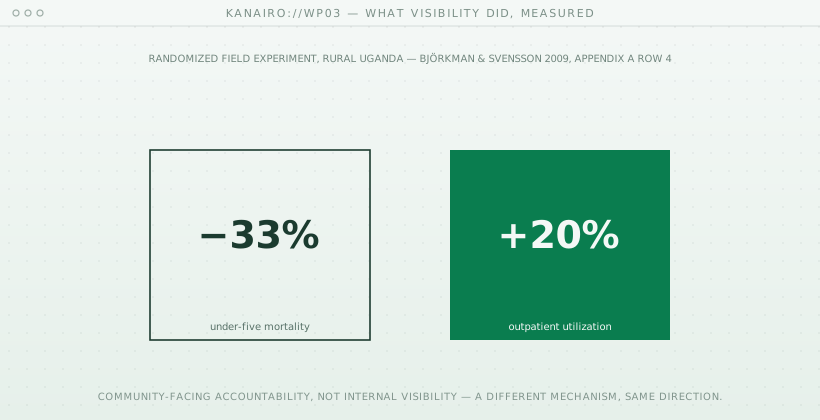
A utility that can see its own operations in real time. A constituency office that knows the status of every case. What changes when Africa's institutions can finally see themselves?