The lab notebook
Writing.
We write the argument before we build the product. These are the arguments.
Working Papers registry · Glossary · Cite all (BibTeX)
Start here
New? Read the argument in order — four essays that build the whole thesis.
- The Missing LayerThe diagnosis: why Africa's institutions operate blind.
- Procuring the UnspecifiableWhy the usual fix fails — software procurement is structurally broken.
- Your AI Strategy Is Digital TransformationThe right question: eliminate processes, don't just accelerate them.
- The Operating WorkforceThe synthesis: a fleet of AI employees, built African-institution-first.
Oct 2026 · 10 min
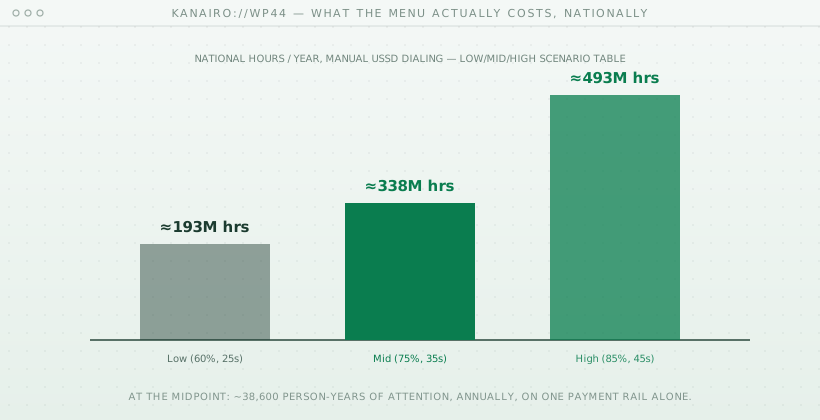
44The Interface Tax: What a 1990s Signalling Protocol Still Costs Kenya, in Hours
USSD carries the large majority of Kenya’s mobile-money transactions for good economic reasons — and nobody has added up the aggregate human time that costs. A sourced, transparent low/mid/high estimate, built on Herd and Moynihan’s administrative-burden framework.
Oct 2026 · 7 min
43Système D as Infrastructure: Nineteen Nairobi Workarounds and the Research That Already Explains Them
Jugaad, Système D, and resilience engineering’s work-as-done/work-as-imagined gap are three literatures describing one phenomenon. A 19-entry field-guide taxonomy of Nairobi workarounds, read against all three, as a small structured dataset rather than only a narrative.
Oct 2026 · 32 min
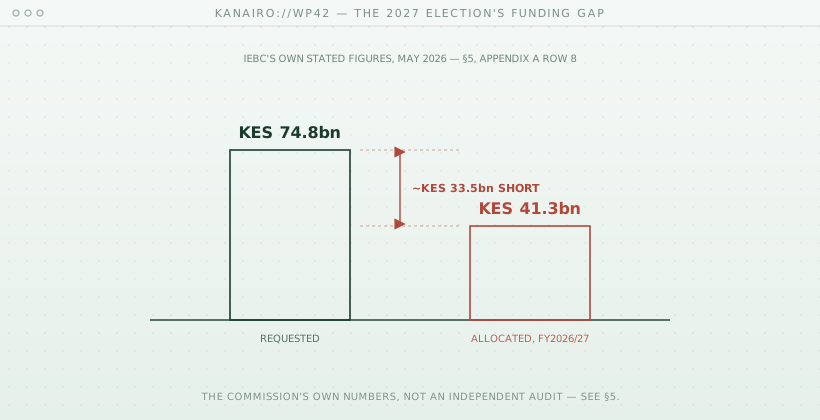
42Only the Date Is Settled
Ten months before Kenya's 2027 election, the one verifiable fact is the gazetted date. The commission, the voting-kit tender, the voter roll, boundary review, and political-data enforcement are each contested, unresolved, or unverifiable.
Sep 2026 · 36 min
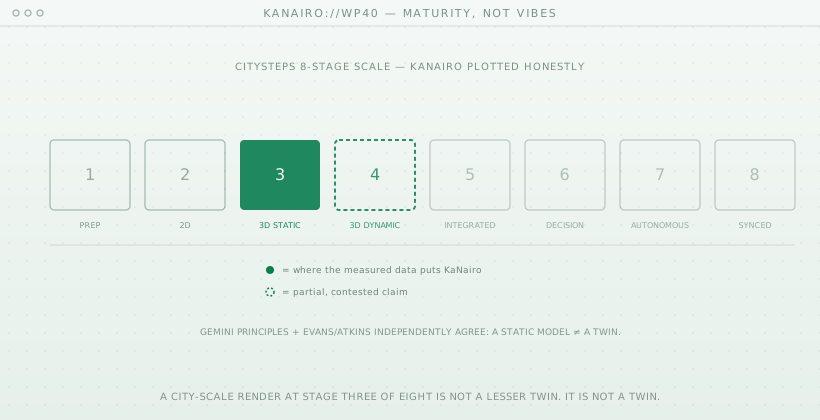
41Stage Three of Eight
Checked against three published digital-twin maturity frameworks, KaNairo lands at "3D static/dynamic" — a good measured model, not yet a twin — and the reason is a nameable, structural one: Nairobi's own institutions don't yet produce the machine-readable data a twin needs.
Sep 2026 · 35 min
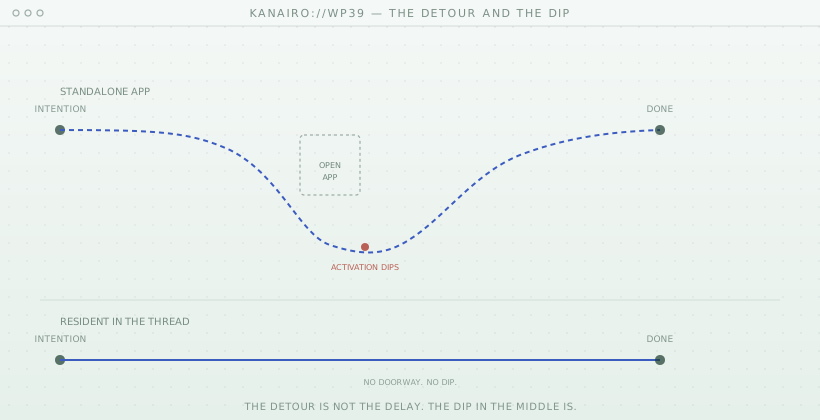
40The Switching Cost Is Why Nothing Sticks
WP26 said the useful personal AI would live in your messages, not in an app you open. This one asks why that actually works — and finds the mechanism in a decades-old finding about what happens to a goal while you're off looking for the app.
Sep 2026 · 32 min
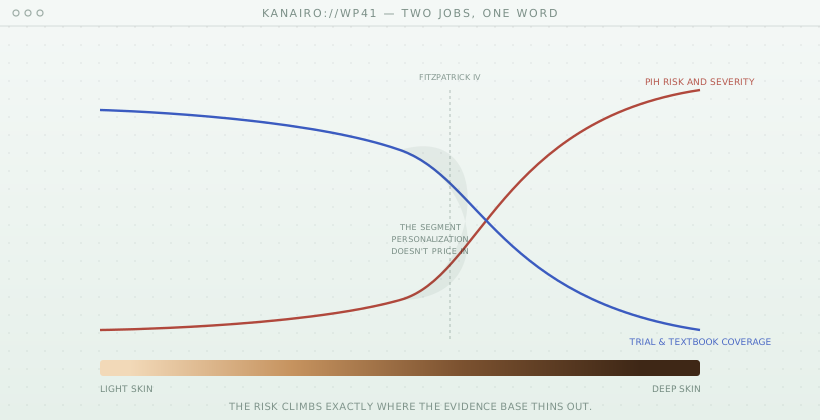
39The Word "Personalized" Is Doing Two Different Jobs
The skincare industry's "personalization" is mostly segmentation by skin type and budget, not the evidenced kind melanin-rich skin needs — personalization against post-inflammatory hyperpigmentation, a risk the mainstream clinical and testing base was never built to price in.
Sep 2026 · 22 min
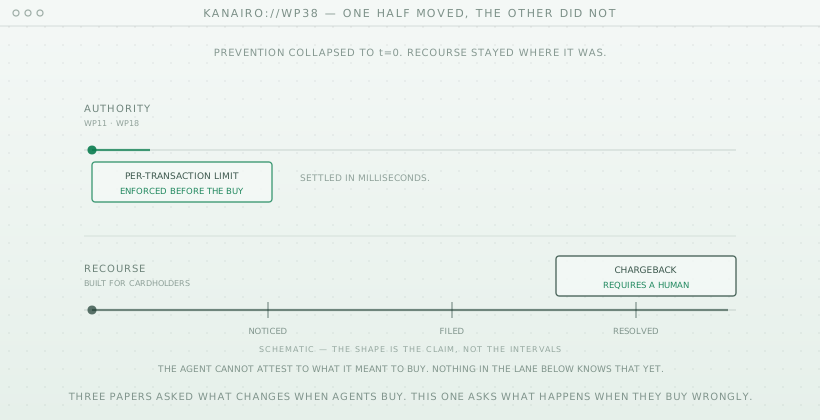
38The Chargeback Assumes a Human
Three papers asked what changes when agents buy. This one asks what happens when they buy wrongly — and finds the wrongful-payment definition itself assumes a human who furnished access and can attest intent.
Sep 2026 · 30 min
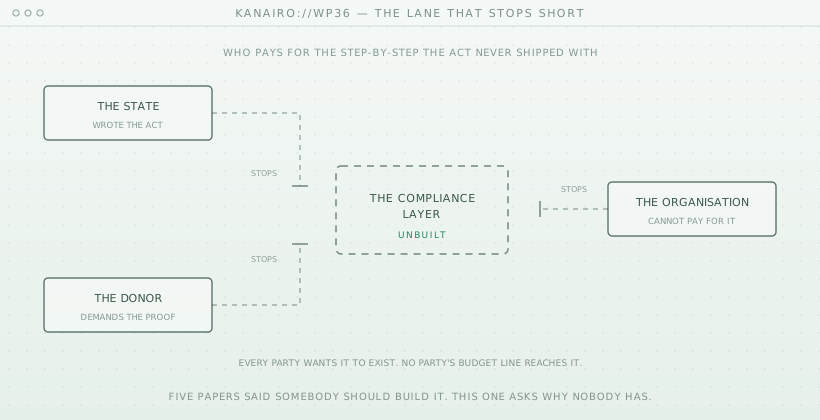
37The Layer Nobody Is Paid to Build
Five papers said somebody should build the PBO compliance layer. This one asks why nobody has — and finds a budget problem, not a technology problem. A court then removed the fee, and the queue still did not clear.
Sep 2026 · 24 min
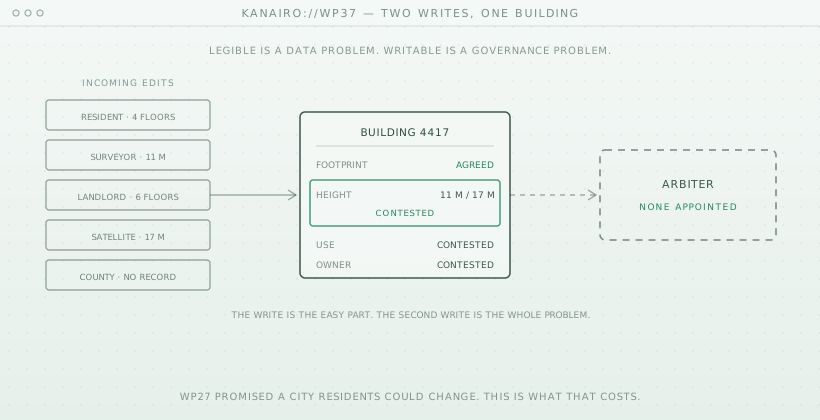
36Who Gets to Say It's There
This series promised a city residents could change, then spent six papers measuring it. The write is easy. Deciding who gets to say it's there is a governance commitment, not a feature.
Aug 2026 · 22 min
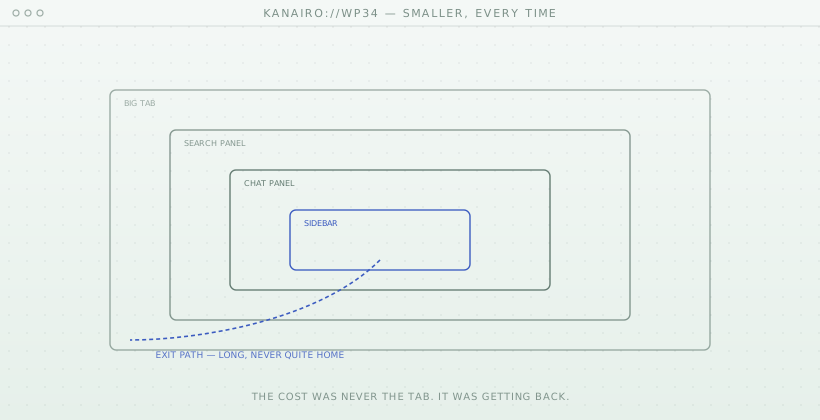
35The Panel Is Also a Tab
Every AI answer surface solves the new-tab reflex by moving you somewhere smaller. The cost was never the tab — it was getting back, and a decade of cognitive-science research on interrupted tasks says why.
Aug 2026 · 23 min
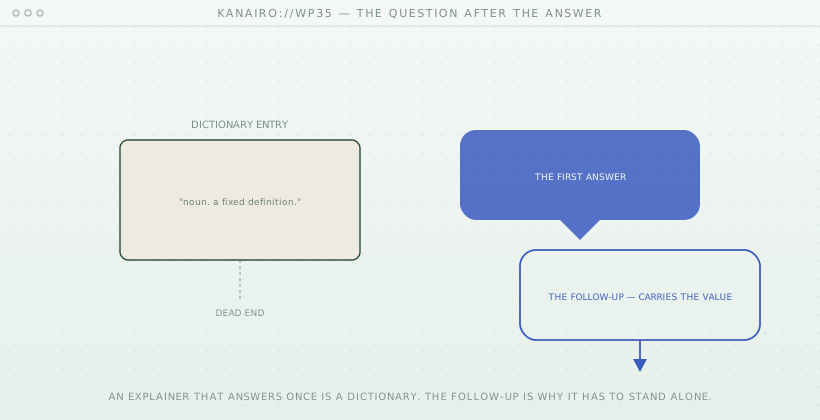
34The Second Question: What Changes When an Explainer Can Be Asked Again
An inline explainer that answers once is a dictionary. The follow-up carries the value — decades-old information science already said so. This version adds the sources, the objections, and a correction to an earlier claim.
Jul 2026 · 27 min
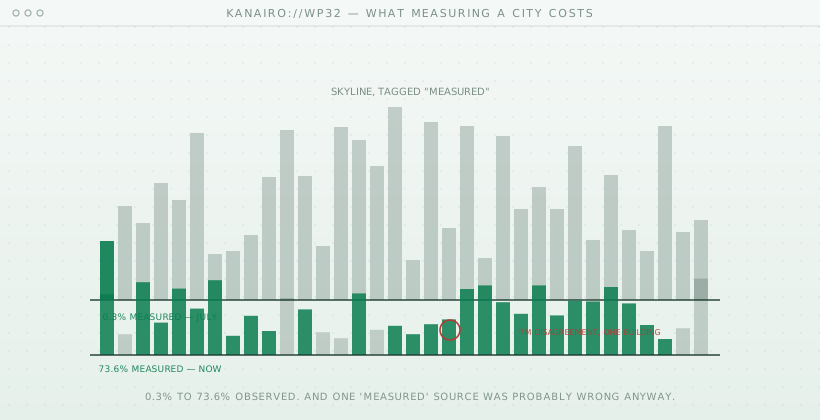
33Legible, Navigable, Writable: What Measuring a City Actually Costs
We measured 73.6% of Nairobi's buildings for free. Building the institution that would have measured them the conventional way has a documented price: about $70 million, which Kenya has not found twice in twenty years of trying.
Jul 2026 · 22 min
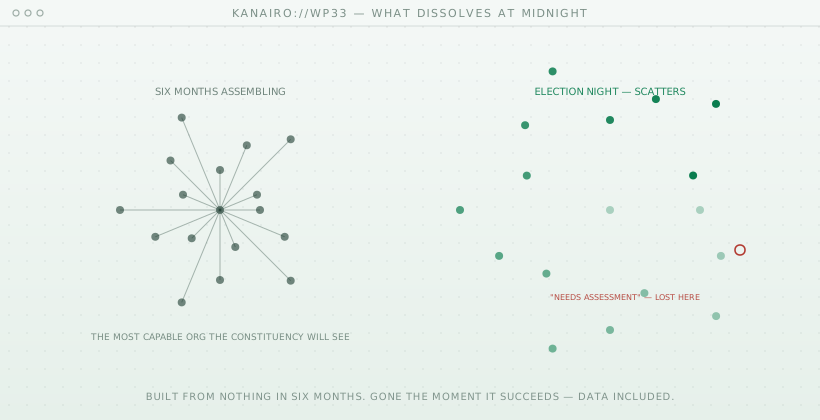
32What Dies on Election Night
A Kenyan campaign is the most operationally capable organisation most constituencies will ever have. It is built from nothing in six months and dissolved the moment it succeeds — taking the country's largest needs assessment with it.

Jul 2026 · 23 min
31From the CBD to All of Nairobi: A Tile-Streamed Building Pipeline for a City-Scale Twin
1,026 CBD buildings became 1.27 million metro-wide, streamed tile by tile from three merged datasets that a 2024 peer-reviewed study finds are "not interchangeable" — completeness bought, accuracy not yet claimed.

Jul 2026 · 23 min
30Estimating What We Don't Know: A Confidence-Tiered Height Heuristic for Data-Sparse Cities
73.5% of Nairobi's modeled building heights were honest guesses. A fresh literature search found the paper's own best-grounded guess — informal settlements are single-storey — is wrong for a documented, specific minority of buildings.
Jul 2026 · 21 min
29Building Nairobi a Second Time: Notes From a Week of Shipping the Twin
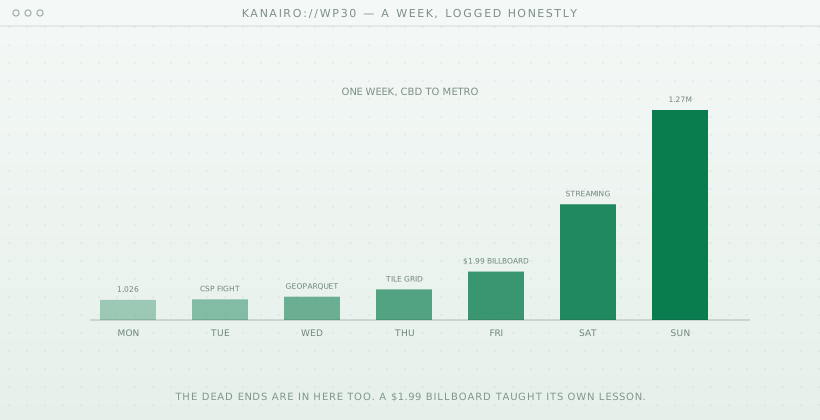
The diary of the week KaNairo went from 1,026 buildings to 1.27 million — the CSP fights, the $1.99 billboard, and what we got wrong about how easy "measure the heights properly" would turn out to be.

Jul 2026 · 22 min
28Who's Missing From the Map: Building-Footprint Coverage Gaps in Nairobi's Informal Settlements
Kibera: 82% of its buildings are human-mapped. Mathare: 16%. The difference is not population or need — it is whether a settlement ever had a named, sustained, resident-led mapping campaign.

Jul 2026 · 22 min
27The Twin Nairobi Doesn't Have Yet
We let people pay $1.99 for a joke billboard in a toy 3D Nairobi. It's a working model of the real feature: a twin residents can act on, not just admire — and what "1:1" actually requires.
Jun 2026 · 13 min
26The Personal Operating Layer: The Case for an AI That Lives in Your Messages
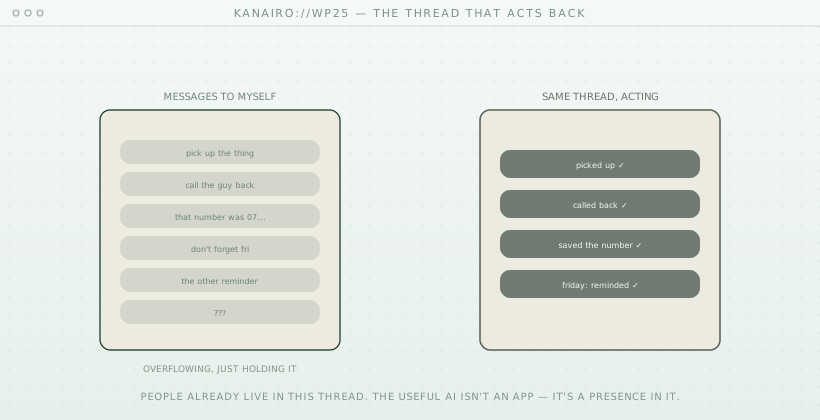
People already run their lives inside chat threads — texting themselves, opening solo group chats to keep track of things. The most useful AI won't be an app you open. It will be a presence in your messages that talks like a friend, acts on your behalf, and holds you to the person you're trying to become.
Jun 2026 · 18 min
25The Operating Workforce: An African-First Theory of AI Employees
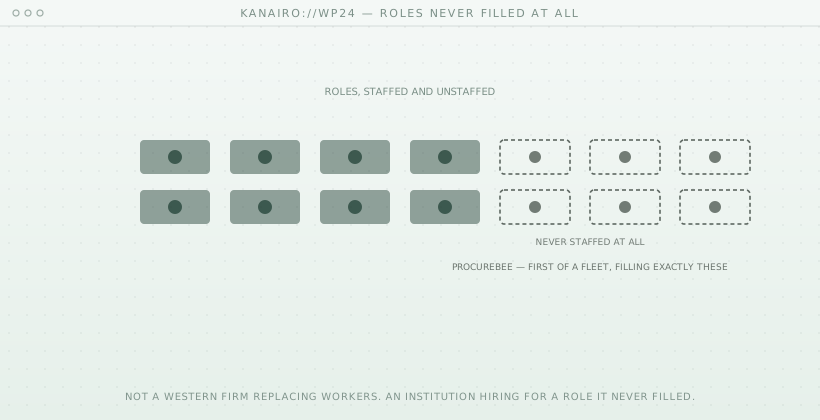
When you hear “AI employee” you picture a Western firm replacing expensive knowledge workers. The African case inverts it: AI employees will first-fill roles institutions never managed to staff at all. ProcureBee is the first of a fleet.
Jun 2026 · 2 min
24Snakes And Ladders: Extra Life
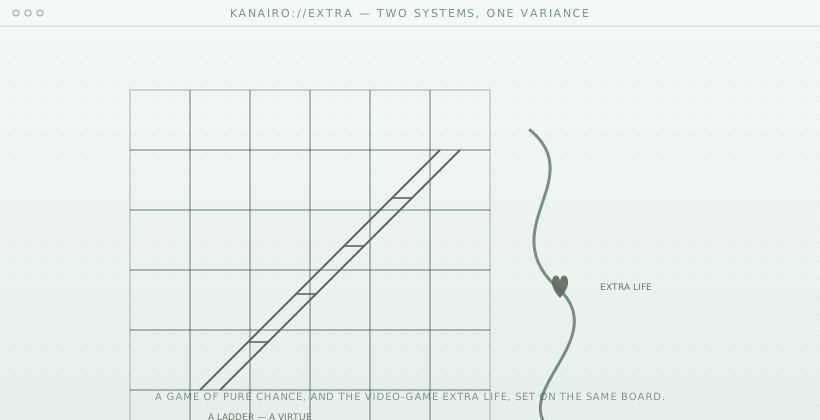
A note ahead of the paper: Snakes and Ladders is a game of pure chance, descended from an Indian morality game whose ladders were virtues and whose snakes were vices. The paper sets that board beside the video-game extra life.
Jun 2026 · 23 min
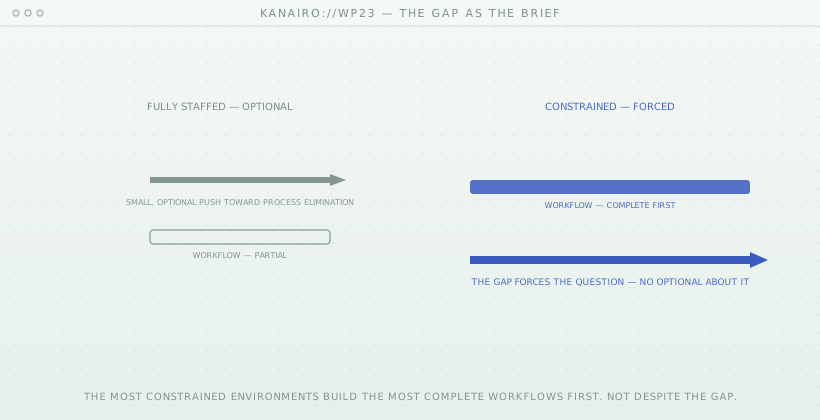
23The Institutional Gap Is the Feature
The most constrained environments will build the most complete AI workflows first — not because of technological advantage, but because in those environments the process-elimination question is forced rather than optional. The gap is not the barrier. It is the brief.
Jun 2026 · 22 min
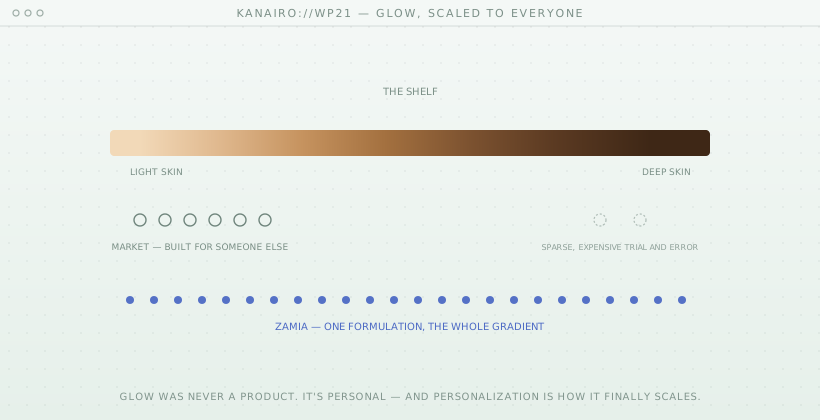
22Personalized Is the New Glow
Glow was never a product — it's the look of healthy skin, and healthy skin is personal. For deep-skinned people, the market sold products built for someone else and left them to expensive, marking trial and error. The new glow is personalization, and Zamia is how it finally scales.
Jun 2026 · 29 min
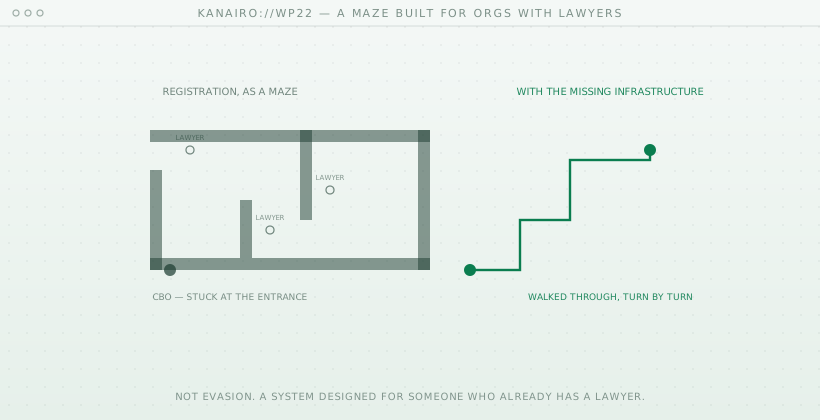
21Your NGO Is Illegal and That Is Not Your Fault
Kenya's civil society compliance gap is not a story about organisations evading registration. It is a story about a registration system designed for organisations with lawyers — and what changes when the infrastructure to navigate it finally exists.
Jun 2026 · 23 min
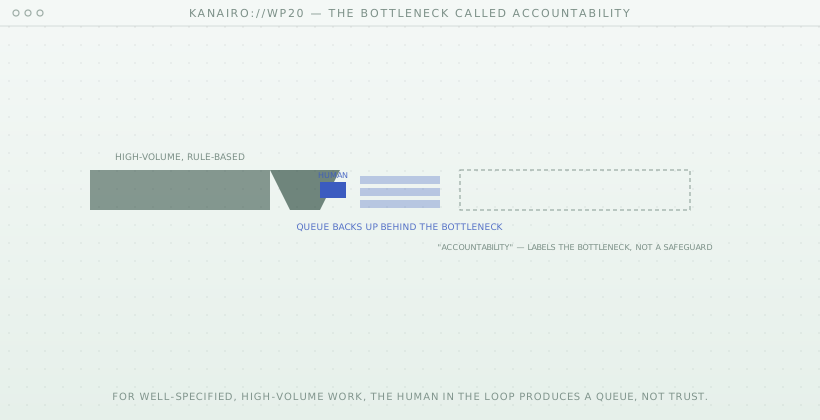
20Accountability Is Not a Reason to Keep Humans in the Process
For well-specified, high-volume, rule-based processes, human involvement does not produce accountability. It produces a bottleneck. The instinct to keep humans in the loop is the institutionalisation of distrust in systems that were never designed well enough to deserve trust. That is no longer the only option.
Jun 2026 · 22 min
19Your AI Strategy Is Digital Transformation With Better Branding
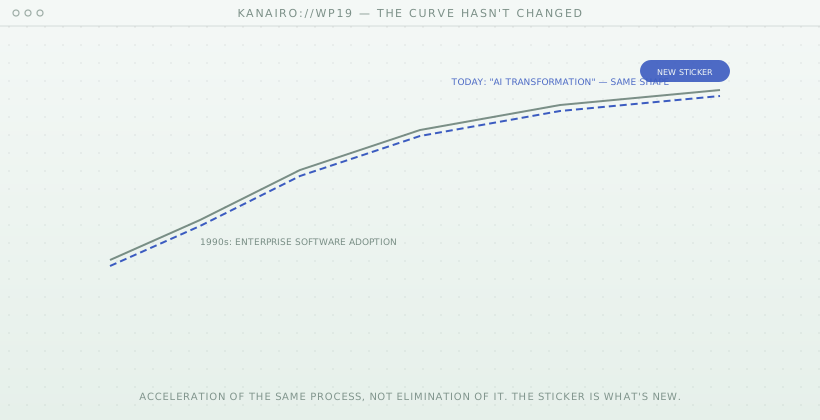
Most of what is being called AI transformation is acceleration of existing processes, not elimination of them. The pattern is identical to enterprise software in the 1990s. The organisations that will actually transform are the ones asking a different question.
Jun 2026 · 27 min
18The Expense Report Was Never About Expenses
The expense report is one of the most universally resented administrative instruments in corporate life. Understanding why it exists — what it is actually for — is the prerequisite for understanding why agentic payment infrastructure makes it obsolete.
May 2026 · 26 min
17Did It Do It For You?
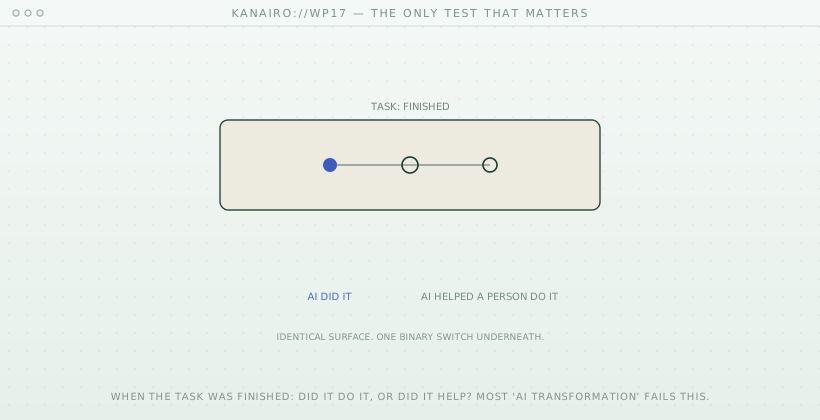
A manifesto for workflow-native AI. The test is binary: when the task was finished, did the AI do it, or did it help a person do it? Most of what is being called AI transformation fails this test. Here is why the distinction matters, and what it means to build software that passes it.
May 2026 · 23 min
16Africa's Regulatory Failure Is Not a Law Problem
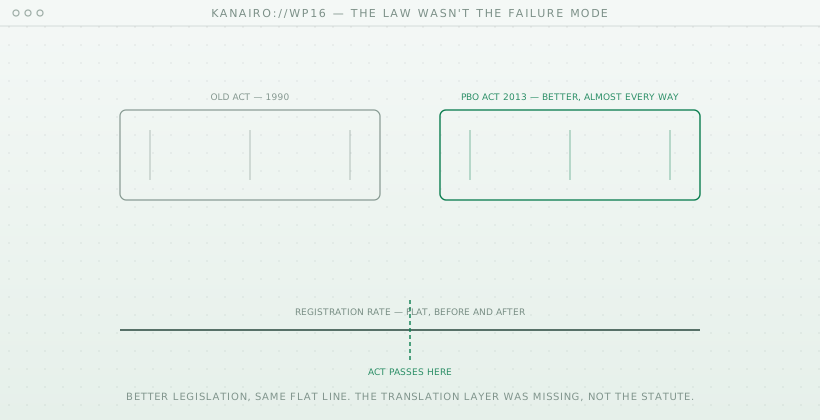
The PBO Act 2013 is better legislation than what it replaced in almost every respect. Registration rates did not meaningfully improve after it passed. The failure mode in African regulatory reform is almost never the quality of the law. It is the absence of the translation layer that makes the law navigable.
May 2026 · 21 min
15Your Donor Is Now Your Regulator
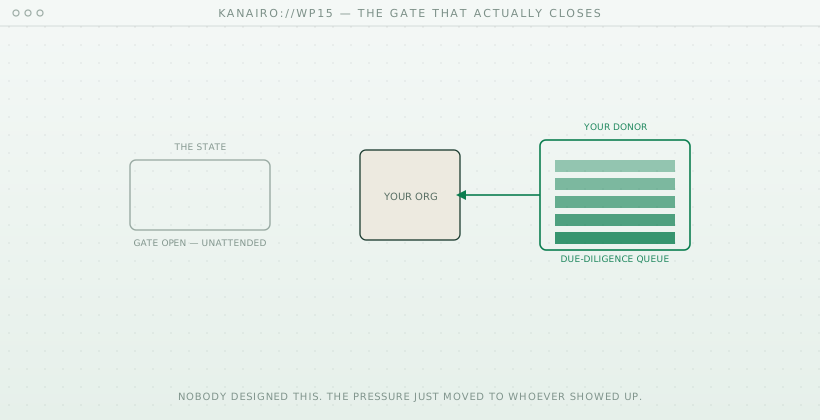
International donors' due diligence requirements are producing compliance pressure the Kenyan state has never consistently applied. The organisations that cannot meet them are increasingly the ones doing the most essential ground-level work. Nobody designed this outcome. Understanding it is the first step to addressing it.
May 2026 · 22 min
14What a Language Model Finds When It Reads Your Constitution
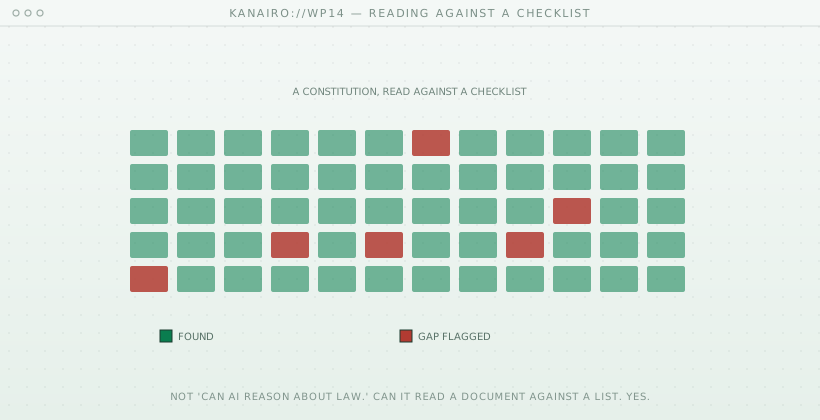
The AI and law conversation is fixated on the hard problem — can AI reason about law? It has missed the tractable problem that is already solved: can AI read a document against a specific checklist and identify gaps? The answer is yes. This is what PBOMaster does, and what it finds.
May 2026 · 31 min
13Kenya's PBO Act Is Finally in Force After a Decade. Most Organisations Still Cannot Comply.
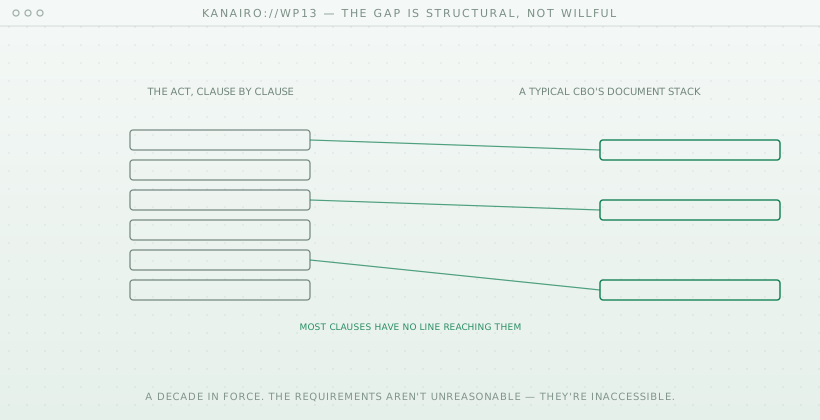
The PBO Act's requirements are not unreasonable. They are inaccessible. This essay walks through what compliance actually demands — clause by clause — and explains why the gap between what the law requires and what a typical CBO has is structural, not intentional.
May 2026 · 31 min
12Your Knowledge Gaps Are the Most Intimate Data You Have
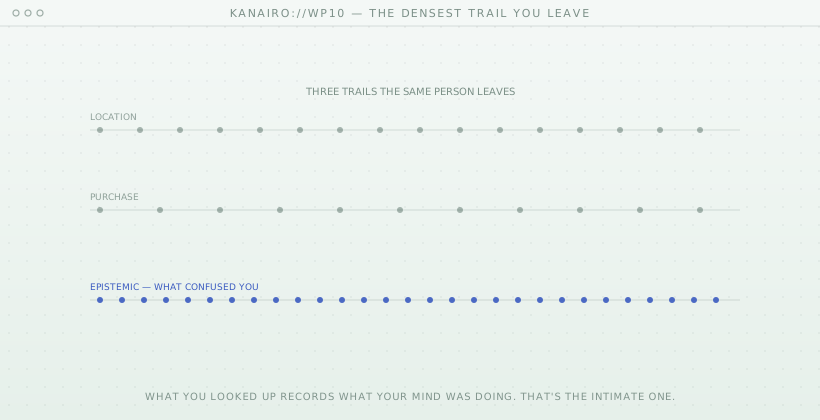
Location data records where your body was. Purchase data records what your wallet did. Epistemic data — what you looked up, what confused you, where your understanding ran out — records what your mind was doing. It is more intimate than any other category of behavioral data. And the tools being built to help people read are being built right at its center.
May 2026 · 31 min
11The Agentic Buyer and the End of Dark Patterns
The SaaS pricing page is not where a company tells you what its product costs. It is where a company attempts to alter your decision-making. An AI procurement agent has no psychological vulnerabilities. It cannot be anchored, socially pressured, or confused by artificial urgency. This is going to restructure B2B software pricing — structurally, not incrementally.
May 2026 · 29 min
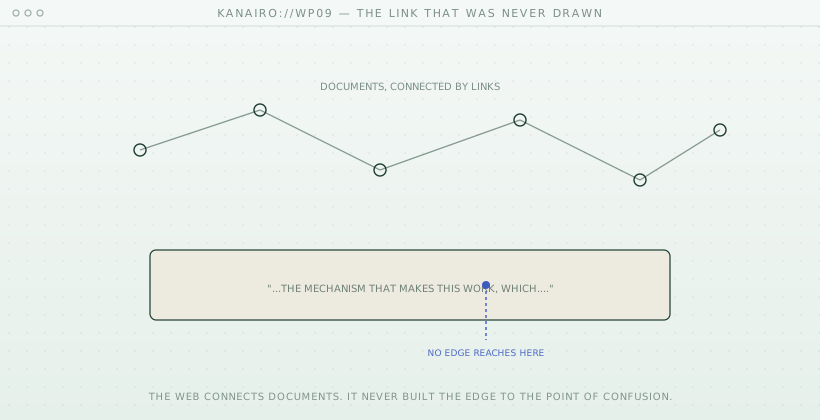
10The Web Was Built for Navigation, Not Comprehension
The hyperlink is a navigation primitive. It connects documents. What it cannot do is bring the explanation to you — inline, at the point of confusion, without a context switch. The web gave us extraordinary access to knowledge. It never built the layer that helps you understand any of it.
May 2026 · 27 min
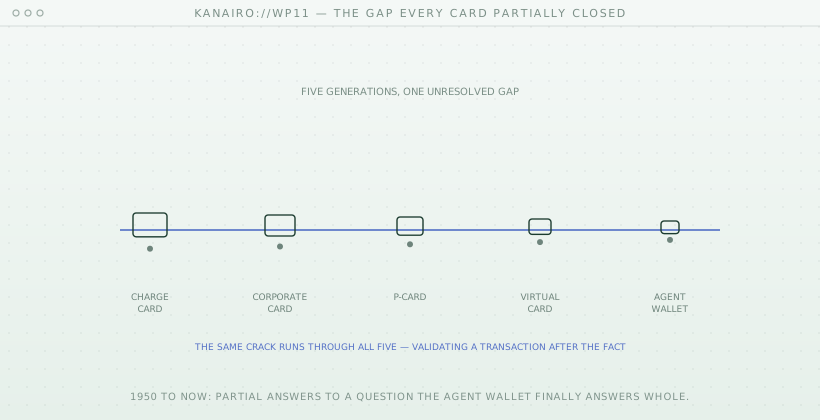
9The Corporate Card Was Never the Solution
Every procurement solution since 1950 — charge cards, corporate cards, P-cards, virtual cards — has been a partial answer to the same trust problem: how do you authorize a specific transaction without manually validating every purchase after the fact? Stripe's agent wallet, launched April 2026, is the first complete answer.
Apr 2026 · 20 min
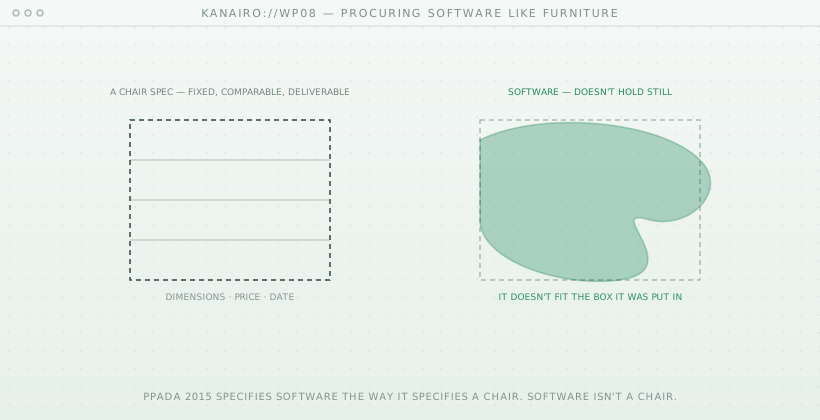
8Procuring the Unspecifiable: Why Institutional Software Procurement Is Broken in Kenya
Kenya's PPADA 2015 treats software like office furniture — specifiable in advance, comparable by price, deliverable on a fixed date. The result is a predictable cycle of failed systems, vendor capture, and fraud-enabling infrastructure. This essay argues for reconceptualising software as a distinct category of public acquisition.
Apr 2026 · 32 min
7The Last Mile of Care: What Kenya's Community Health Workers Are Missing
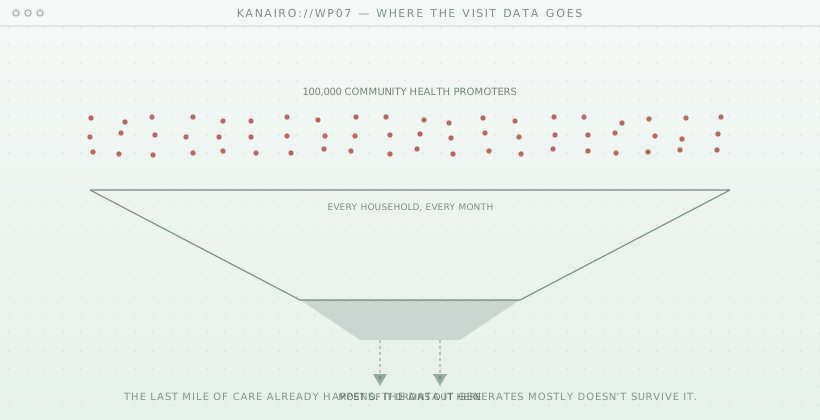
Kenya has 100,000 Community Health Promoters visiting every household monthly. The data they collect mostly disappears. Here is what a well-instrumented community health system would look like.
Mar 2026 · 22 min
6The Offline-First Problem: Why Most Institutional Software Fails in the Field
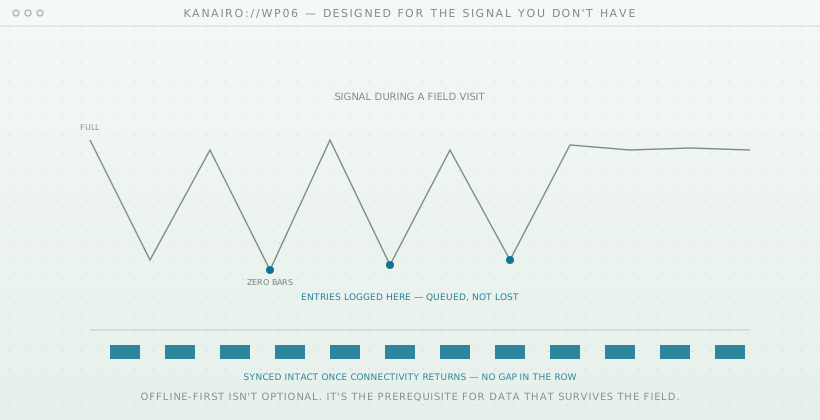
Most software deployments in Africa fail for the same reason: they were built assuming connectivity that doesn't exist. Building for offline-first isn't optional — it's the prerequisite for data integrity.
Mar 2026 · 24 min
5Democracy Is Infrastructure
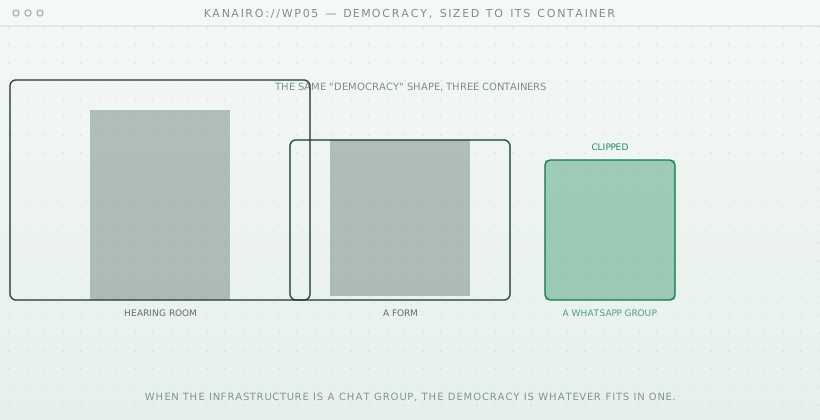
We talk about democracy as values and ideals. But in practice, democracy is what runs on the infrastructure. When the infrastructure is a WhatsApp group, the democracy is whatever fits in one.
Feb 2026 · 22 min
4Why Africa Needs Stablecoin Rails Before It Needs a Digital Currency
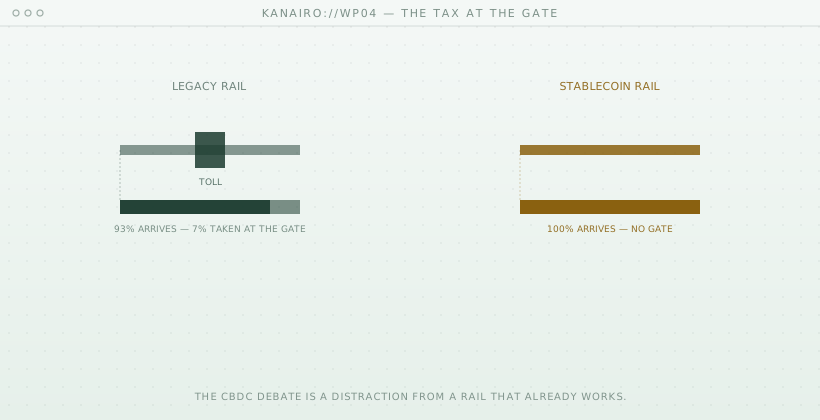
The debate over CBDCs is a distraction. What Africa needs, now, is stablecoin-native payment rails that route around the 7% tax the legacy system levies on every transfer.
Feb 2026 · 23 min
3What Happens When Institutions Can Finally See Themselves
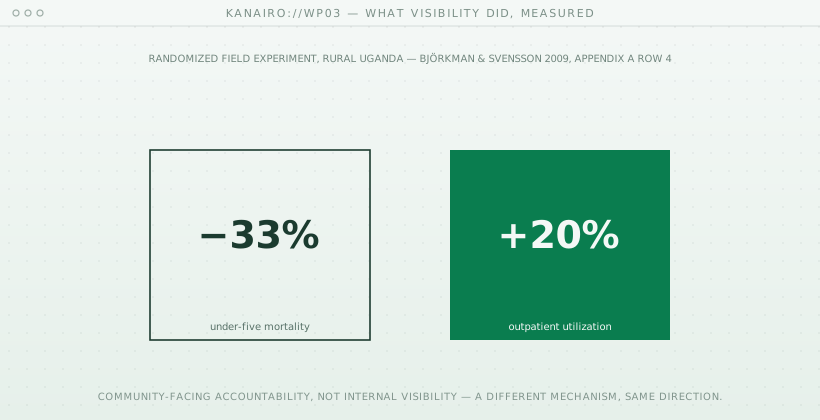
A utility that can see its own operations in real time. A constituency office that knows the status of every case. What changes when Africa's institutions can finally see themselves?
Jan 2026 · 25 min
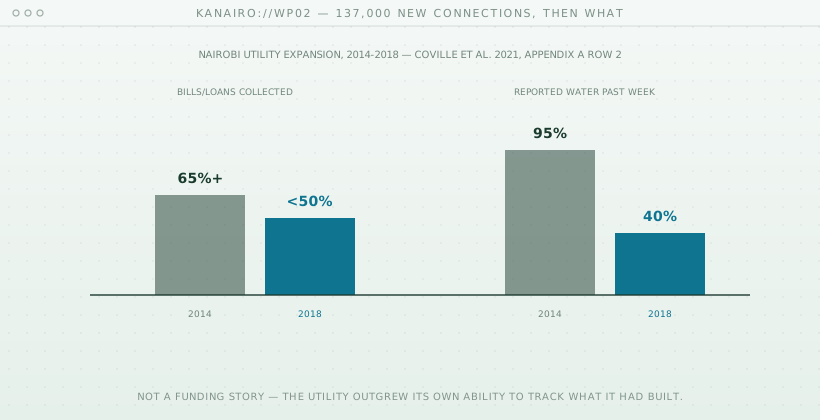
2Africa's Institutions Don't Have a Funding Problem
Africa's public institutions aren't failing from a lack of resources. They are failing because they have never had the right tools. The technology exists — it just hasn't been built for here.
Jan 2026 · 28 min
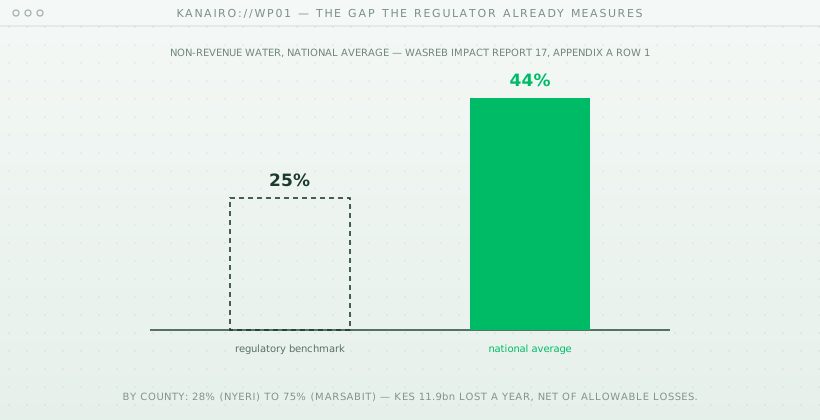
1The Missing Layer: Why Africa's Institutions Operate Blind
Africa's institutions are not short of mandates, people, or data. They are short of the operational layer that lets them see themselves. This is the thesis that started Flux.